

Why mastering splitting and doubling will improve your blackjack decisions
You already know hitting and standing are the backbone of basic blackjack play. Splitting and doubling are the moves that let you change the size and shape of a hand—and when used correctly they can shift the odds in your favor. This section explains the practical purpose of each action and why rules and small exceptions matter to your long‑term results.
How these options change the math of a hand
When you split a pair, you convert one hand into two separate hands, each played independently and usually requiring an extra wager equal to your original bet. When you double down, you commit to one additional card and double your bet, increasing both potential reward and risk. Because both moves alter bet size and the number of decisions you make, correct application reduces variance and improves expected value when the conditions are right.
- Splitting creates two chances to beat the dealer instead of one—important when the dealer shows a weak upcard.
- Doubling concentrates equity when you are likely to finish with a strong total (commonly 9–11).
- House rules—like whether resplitting or doubling after split (DAS) is allowed—change the optimal play and the house edge.
Practical splitting rules: what casinos allow and how you should respond
Casinos display a variety of splitting rules that directly affect your strategy. You need to know not just whether you can split, but important exceptions: limits on resplitting, restrictions on splitting aces, and whether doubling after splitting is permitted. Learn these details before you sit down so you can adjust your plays quickly and correctly.
Common splitting variations and how they influence decisions
- No resplit: If the casino forbids resplitting, treat pairs you might otherwise split more conservatively—your opportunity cost of splitting increases.
- Resplit to X hands: Being allowed to resplit (often up to 3 or 4 hands) makes splitting tens and eights more attractive in specific dealer upcard situations.
- Splitting aces: Many casinos allow only one card per split ace; this reduces the EV of splitting aces versus favourable dealer upcards.
- Doubling after split (DAS): If DAS is permitted, you can double on split hands, which often turns marginal splits into correct plays.
As you learn tableside, memorize the table’s rule set and default to basic strategy charts adjusted for those rules. For example, with DAS allowed you’ll split more aggressively; without it, you’ll tighten up on pairs like 2s and 3s against certain dealer cards.
Next, you’ll want a focused walkthrough of doubling rules, the exact spots where doubling yields the biggest EV, and pro exceptions that exploit specific rule combinations—let’s examine those doubling scenarios and advanced tweaks in the following section.
Doubling down: the exact spots that yield the biggest EV
Doubling is a high-ROI move because you increase your stake when the odds favor you. In practice, the most reliable doubling opportunities are narrow and well-defined: hard totals of 9–11 and a range of soft totals where a single extra card is likely to turn into a strong final hand. Memorize the core doubles below and then learn the small rule-dependent tweaks that follow.
- Hard totals: The textbook doubles are hard 11 (double against nearly any dealer upcard), hard 10 (double versus most dealer cards except the strongest upcards), and hard 9 (double against weak dealer upcards). These spots concentrate equity: you have a good chance of making a high total with one card while the dealer is likely to bust or finish weak.
- Soft totals: Soft hands (A‑X) change the math because the ace can act as 1 or 11. Standard double spots include several A2–A7 combos when the dealer shows a vulnerable upcard—these doubles convert a flexible hand into a stronger, often unbeatable total with one card.
- Table rule effects: The number of decks and whether the dealer hits or stands on soft 17 (H17 vs S17) change the exact ranges. Single‑deck and S17 games slightly widen correct doubling spots; H17 and multi‑deck games narrow them. Also, if a table allows doubling on any two cards (many do), you can sometimes double in marginal situations you wouldn’t on a “only 9–11” table.
Practical rule of thumb: be aggressive with doubles when your hand is likely to make 18–21 with one card and the dealer’s upcard is 2–6 (a weak upcard). If the dealer shows 7–Ace, tighten up; the dealer is more likely to reach a competitive total, so the EV of doubling falls.

Advanced tweaks and pro exceptions: when to deviate from basic charts
Once you’ve mastered standard splits and doubles, the real edge comes from small, situation-specific deviations. These are not wild gambles but disciplined adjustments that experienced players use when rules, card composition, or table conditions change the expected value of a move.
- Rule-combination exploits: If doubling-after-split (DAS) is allowed, splitting marginal pairs (2s, 3s, or 7s) against weak dealer cards becomes more attractive because you can follow up with a double on the new hand. Conversely, when the casino forbids DAS or resplitting, you should play those same pairs more conservatively.
- Composition-dependent choices: Basic strategy assumes decisions based on totals, not the exact cards. In some two-card situations the specific composition matters—for example, two small cards that add to 12 can behave very differently depending on whether they are 6+6 or 3+9. Pros learn a few high-value composition exceptions to avoid bad hits or to squeeze an extra double when the deck composition supports it.
- Counting and index plays: Card counters use count-based indices to turn borderline plays into profitable ones—doubling more often when the deck is rich in tens, or splitting certain pairs only when the count meets a threshold. These are advanced techniques; without a count, stick to basic-strategy deviations driven by rules rather than guesses.
- Late surrender and doubling interactions: When late surrender is allowed, some marginal doubles or splits become less attractive because surrender offers a lower-risk alternative in specific dealer-upcard scenarios. Learn how surrender and doubling options interact at your table so you choose the option with higher long-term value.
In short: learn the baseline doubling and splitting plays first, then layer on rule-aware tweaks and a few composition or count-based exceptions if you’re playing at a level where those adjustments are practical. In the final part we’ll pull these ideas together with quick decision aids and drills to build confident, rules-aware instincts at the table.
- Drill 1 — Rule-spotting (5 minutes): Before sitting, read the table placard and list whether DAS, resplits, single-card aces, and surrender are allowed. Repeat until you can identify the rule set in under 30 seconds.
- Drill 2 — Two-card flash (10 minutes): Flash a dealer upcard and one of the common two-card player totals (e.g., 9, 10, 11, A6, 8‑8). Say aloud the basic action (split/double/hit/stand/surrender) within 3 seconds to build automatic responses.
- Drill 3 — Composition checks (15 minutes): Practice a short list of composition exceptions—6+6 vs 4, 3+9 vs 12, A‑7 vs 9—so you recognize when the exact cards change the right play.
- Drill 4 — Rule-adjustment scenarios (10 minutes): Create pairs of hands and swap a “DAS allowed” or “No resplit” rule. Note how your decision changes and why. This builds flexibility for different tables.
- Drill 5 — Short-count awareness (advanced): If you’re learning counting, practice one or two simple indices (e.g., double 10 vs dealer Ace only at high positive counts). Use these sparingly until they’re reliable.
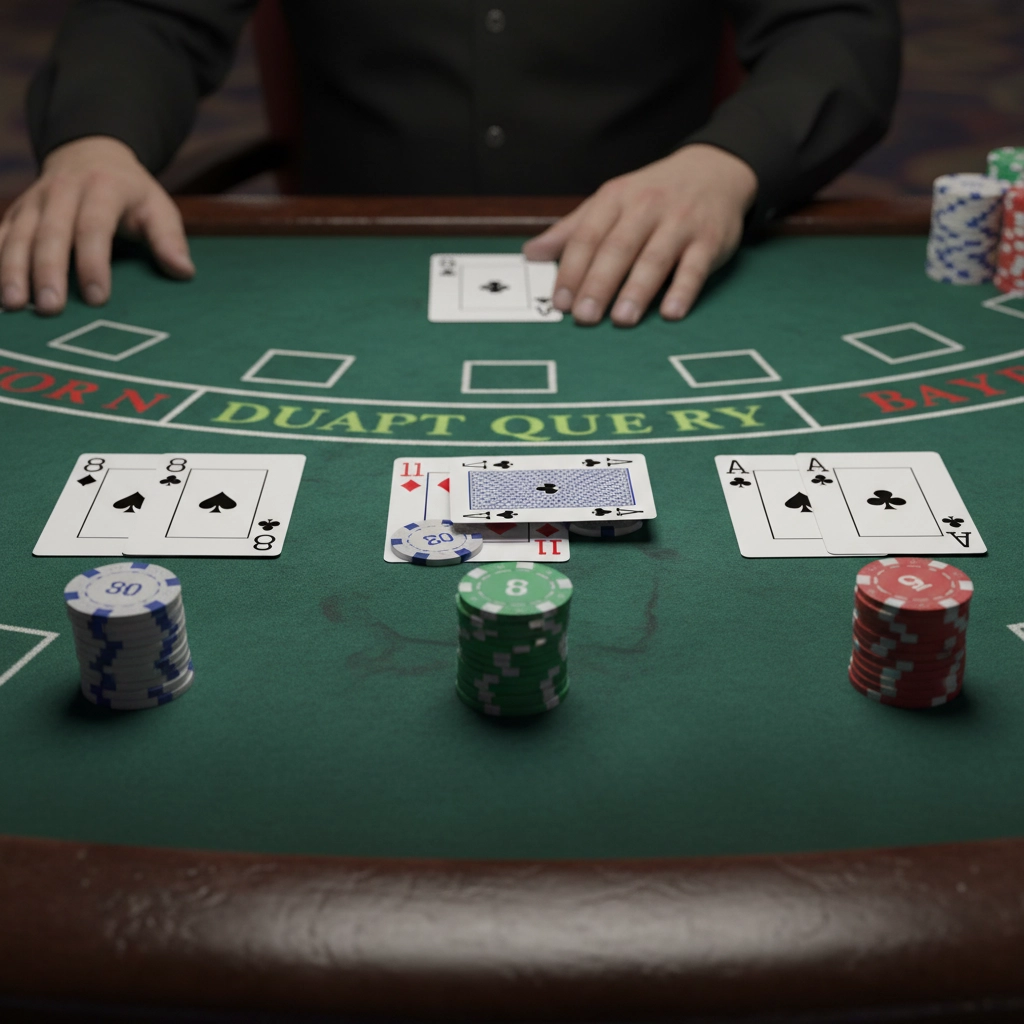
Putting it into practice
Play with purpose: use the drills above in low‑stakes or free-play environments until the right split and double decisions feel automatic. Always check the table rules first and let those rules guide small strategy shifts. If you want ready-made charts, calculators, and deeper rule-by-rule comparisons, consult a reliable resource like Wizard of Odds.
Keep your sessions disciplined—track deviations from basic strategy and only apply composition or count-based exceptions when you have a clear, practiced justification. Over time, this approach turns isolated correct plays into a consistent improvement in your results and confidence at the table.
Frequently Asked Questions
When should I split aces, and how do single-card restrictions affect that choice?
Splitting aces is almost always correct against a dealer upcard that’s not overwhelmingly strong because each ace is a high-value starting hand. However, if the casino restricts split aces to one card each (and often forbids resplitting), the expected value drops—so be mindful that the benefit of splitting aces is reduced in those games.
What does “doubling after split (DAS)” mean for my splitting strategy?
DAS allows you to double on hands created by a split. When DAS is permitted, many marginal splits become profitable since you can follow a successful split with a double. If the table forbids DAS, tighten up on splits like 2s, 3s, and 7s versus dealer upcards where you’d rely on a later double to extract EV.
How does late surrender interact with doubling and splitting decisions?
Late surrender gives you the option to forfeit half your bet after the dealer checks for blackjack. When available, surrender can be the superior choice in certain marginal situations (for example, a hard 16 vs dealer 9). Knowing when surrender beats a double or split requires understanding the table rules and comparing the expected losses—use surrender sparingly and only when it reduces long-term downside compared with playing on.