

Why single-deck blackjack deserves your attention
You’ve probably heard that single-deck blackjack can offer better odds than multi-deck games — but the advantage isn’t automatic. Single-deck play changes card composition, decision value, and the impact of specific casino rules. If you want to tilt the math in your favor, you need to understand which rules matter, how your basic choices shift, and what to look for before you sit down.
What makes single-deck rules different from other blackjack games
At its core, single-deck blackjack uses only one 52-card deck. That simple fact affects frequency of tens and aces showing up after your initial cards, which in turn alters your probabilities for naturals, doubles, and busts. But the real difference is how the casino applies other rules around that deck:
- Blackjack payout: The standard favorable payout is 3:2 for a natural (ace + 10-value). Avoid tables paying 6:5 — that dramatically raises the house edge even in single-deck games.
- Dealer behavior: Whether the dealer hits or stands on soft 17 (H17 vs S17) significantly affects your edge. S17 (dealer stands) is better for you.
- Doubling rules: The ability to double on any two cards and to double after splitting (DAS) improves your expected value.
- Splitting aces: Some tables allow only one card after splitting aces; others allow resplits. Being able to resplit aces or receive more than one card can be advantageous.
- Surrender options: Late surrender (after dealer checks for blackjack) gives you a recovery option on some losing hands and lowers the house edge.
Early, practical tips you can apply immediately
Before you start adjusting strategy, adopt a few practical habits that will improve your odds right away:
- Choose tables that pay 3:2 for blackjack and have S17, DAS, and late surrender when possible.
- Check the max and min bets to fit your bankroll — single-deck tables sometimes have higher minimums.
- Use a single-deck basic strategy chart (not a multi-deck one). Strategy shifts slightly because card removal effects are stronger with one deck.
- Avoid tables advertising 6:5 payouts or restrictive splitting rules — the convenience of a single deck can be negated by poor paytables.
- Keep your bet sizes conservative until you’re comfortable with how the single-deck game flows — variance can feel larger with fewer cards.
These initial decisions — which table to play and which basic strategy to use — produce the largest immediate improvements in your expected result. Next, you’ll learn the single-deck-specific strategic adjustments and simple counting cues that further increase your edge at the table.
Single-deck strategy tweaks: when to deviate from basic play
Single-deck play doesn’t overturn basic strategy — it refines it. Many of your core decisions (stand on stiff hands against certain dealer upcards, double 11 against a weak dealer, split pairs like aces and 8s) remain the same. What changes are the marginal, frequency-driven spots where a single missing or extra ten or ace swings the expected value enough to flip the correct play.
Rather than memorizing an exhaustive list of one-deck exceptions, focus on the common marginal decisions where single-deck effects matter most:
- Marginal stands vs hits on 12–16: With one deck, the ratio of high to low cards left behind matters more. If tens are relatively plentiful, the dealer is likelier to bust and some marginal hits become less attractive. Conversely, an early run of tens changes the math the other way.
- Doubling down decisions: Doubling for value (10 or 11 vs a dealer 9 or lower) gains or loses value faster with a single deck because the chance an extra ten appears is more sensitive to card removal. If the visible cards suggest a healthy supply of tens/aces, be more aggressive; if not, tighten up.
- Splitting and resplitting: The value of splits such as 2s/3s and 7s depends on how many small cards remain to build two good hands. Single-deck variance means you should favor splits when the shoe looks rich in small cards and be cautious when high cards dominate.
Practical approach: use a single-deck basic strategy chart as your baseline, then apply simple situational adjustments based on the visible card flow (next section). Avoid large, frequent deviations unless you’re tracking counts — small, informed tweaks will capture most of the single-deck edge without exposing you to avoidable risk.

Simple card-removal cues and light counting for single-deck
You don’t need to be a professional card counter to benefit from single-deck card removal effects. A few light, easy-to-apply cues will improve both play and bet-sizing.
- Watch tens and aces: Mentally note whether a disproportionate number of ten-value cards and aces appear in the first several hands. If you see many tens early, the deck is “ten-depleted,” which reduces the value of doubling and increases the dealer’s chance to make hands — play tighter and reduce doubles/splits.
- Track low cards loosely: If low cards (2–6) are showing frequently, the deck is rich for the player: dealer bust chances rise and doubling opportunities improve. Be slightly more aggressive on doubles and splits in these stretches.
- Short-term running count: Use a very simple running tally: +1 for low cards (2–6), 0 for 7–9, −1 for 10s and aces. You don’t need exact conversion to true count — just treat +2 or higher as “favorable” and −2 or lower as “unfavorable.”
These light-count cues are quick to learn and hard for casinos to spot. They don’t promise big edges, but they allow you to extract the most from single-deck dynamics without complex systems.
Bet sizing and bankroll rules for single-deck sessions
Single-deck games often come with higher variance; fewer cards means bigger short-term swings even when your strategy is sound. Protect your bankroll with conservative bet-sizing and a clear loss threshold.
- Keep base bets small: stake 0.5–1.5% of your total bankroll per hand as a starting point. For a $1,000 bankroll, that’s about $5–$15 per hand depending on table minimums.
- Use flat betting unless your light counting signals a favorable deck: increase bets modestly (1.5–3× your base unit) only when your simple running cue reaches a clearly positive threshold.
- Set stop-loss and session limits: decide beforehand how much you’ll risk in one sitting (for example 10–20% of bankroll) and walk away at that point to preserve capital for future sessions.
By combining targeted single-deck strategy tweaks, light card-awareness, and disciplined bankroll rules, you capture most of the single-deck advantage without needing advanced counting expertise. In Part 3 we’ll cover example hands and a few common in-game scenarios to reinforce these principles.
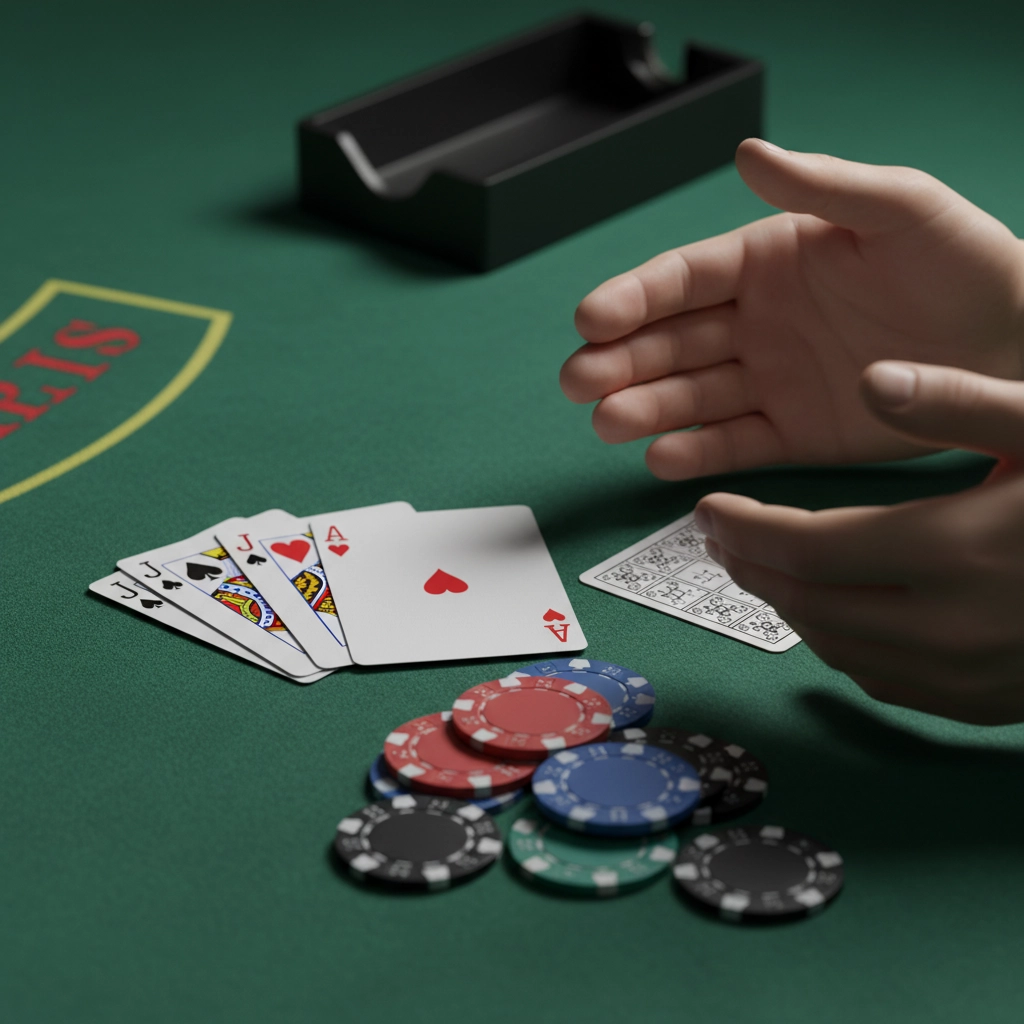
Example hands and quick application
Use these short scenarios to see the earlier principles in action. They’re not exhaustive but show how single-deck effects change practical choices.
-
Player 11 vs dealer 10: Standard single-deck basic strategy usually recommends doubling 11. If your light running cue shows the deck is ten-depleted (more negatives), consider hitting instead of doubling — the extra-card expectation falls when tens are scarce.
-
Player 12 vs dealer 3–6: Stand on 12 vs 4–6 in basic strategy. Against a dealer 3 or 2 the single-deck context matters: if many low cards have already appeared (deck high-rich), standing becomes a safer default; if low cards dominate the visible cards, be mindful that hitting might sometimes be preferable against a 2 or 3.
-
Splitting 2s or 7s vs dealer 8–9: Splits that are marginal in multi-deck play can shift in value with one deck. If the short-term flow shows plenty of small cards (2–6), splits gain value; if tens are abundant, avoid speculative splits and favor simpler hands.
Putting single-deck play into practice
Short practice sessions with deliberate focus on rule selection, single-deck strategy charts, and the light counting cues described here will make the single-deck advantages real without requiring advanced counting skills. Remember to pick tables with player-friendly rules (3:2 payout, S17, DAS, and late surrender when available), manage your bankroll conservatively, and use modest bet increases only when your simple running cue clearly favors you. For more in-depth strategy charts and rule comparisons, see Wizard of Odds single-deck guide.
Frequently Asked Questions
Is single-deck blackjack always a better choice than multi-deck games?
No. Single-deck can offer lower house edge, but only when favorable rules (3:2 payout, S17, DAS, reasonable splitting/surrender options) are present. A single-deck game with 6:5 payout or restrictive rules can be worse than a well-structured multi-deck table.
Do I need to learn full card counting to take advantage of single-deck effects?
No. You can gain most practical benefits with light, easy-to-use cues: watch tens and aces, loosely track low cards, and use a simple running count (+1 for 2–6, 0 for 7–9, −1 for tens/aces). Treat +2 or higher as favorable and −2 or lower as unfavorable for modest bet and play adjustments.
How much should I increase bets when the deck looks favorable?
Increase bets conservatively. The article recommends modest raises of about 1.5–3× your base unit when your running cue shows a clearly positive state. Keep base bets small (roughly 0.5–1.5% of your bankroll) and avoid large multipliers; disciplined, measured increases capture advantage while controlling variance.