

Arriving at the Table: What to check before you place a bet
When you sit down or approach a blackjack table, you should first confirm a few practical details so you know exactly how the round will play out. Look for the table limits printed on the felt — the minimum and maximum bets allowed. Check the rules posted near the dealer or on the table rail: important variations like whether the dealer hits or stands on soft 17, whether late surrender is allowed, and whether doubling after a split is permitted will affect your strategy and expected return.
- Table limits: set your bet size within the posted range.
- Dealer rules: standing or hitting on soft 17 changes house edge.
- Special options: insurance, surrender, doubling, and splitting rules.
- Shoe vs. single/double deck: fewer decks generally favor the player.
Also decide how much of your bankroll you plan to risk this session. Betting responsibly allows you to apply proper strategy without chasing losses. Once you place your bet in the betting circle, the dealer will deal two cards to each player and two to themselves (one usually face up and one face down in most casino games).
Your Opening Hand: Recognizing totals and immediate options
After the deal, your first two cards are the foundation of your play. You need to quickly evaluate the type of hand you have and which actions are available. Blackjack terminology will help you make those decisions:
Types of opening hands
- Blackjack (natural) — an Ace + 10-value card for a total of 21. This usually pays 3:2 (confirm table pays) and beats all dealer hands except a dealer blackjack.
- Hard total — a hand without an Ace counted as 11, e.g., 10–7 = 17.
- Soft total — a hand including an Ace counted as 11 unless that would bust, e.g., Ace–6 = soft 17.
- Pair — two cards of the same rank, e.g., 8–8, which may be splittable depending on table rules.
Immediate player actions and when to use them
For each opening hand you’ll have a limited set of actions. Knowing when to hit, stand, double, split, or surrender is central to effective play:
- Hit — take another card. Use when your total is too low to stand against the dealer’s upcard.
- Stand — keep your current total. Use when your hand is strong enough that an extra card is more likely to hurt than help.
- Double down — double your bet and take exactly one more card. Best on specific totals like 9–11 (varies by dealer upcard).
- Split — if you have a pair, split into two hands and match your original bet. Splitting aces and eights is often recommended; avoid splitting tens.
- Surrender — forfeit half your bet to fold the hand (if allowed). Use when the dealer’s upcard makes your chance of winning very low.
Making the right opening decision depends on both your hand type and the dealer’s visible card. In the next section, you’ll learn how to read the dealer’s upcard, apply basic strategy charts, and follow the dealer’s mandatory actions that determine the round’s resolution.

Reading the Dealer’s Upcard: What it signals and how to respond
The dealer’s face-up card is the single most important piece of information you have. It doesn’t tell you the dealer’s final total, but it lets you estimate whether the dealer is likely to bust or make a strong hand — and that should guide your choice to hit, stand, double, split, or surrender.
- Dealer 2–6 (weak upcards) — These are “bust” cards. The dealer must draw more often and has a higher chance of going over 21. Against these cards you can be more conservative: standing on marginal totals (for example hard 13–16 vs 2–6) and avoiding risky hits is usually correct.
- Dealer 7–Ace (strong upcards) — The dealer is less likely to bust and more likely to reach 17–21. When facing these upcards you should be more aggressive about improving your hand: hit lower totals that you’d stand on against weak cards, and look for doubling opportunities when appropriate.
- Ace upcard — Treat this as a strong upcard. Remember the dealer may check for blackjack (see next section). Avoid insurance — it has a negative expected value for basic players.
Use the upcard in combination with whether your hand is hard, soft, or a pair. A soft hand gives you flexibility because the Ace can change value; a hard hand requires more caution when the dealer shows strong cards.
Using Basic Strategy Charts: How to apply them at the table
Basic strategy charts condense mathematically optimal plays for every two-card opening hand versus each dealer upcard. Memorizing or consulting a chart reduces the house edge to its minimum for the rules of the specific game you’re playing.
- Choose the right chart — Charts vary by deck count and whether the dealer hits or stands on soft 17, and whether surrender, double-after-split, or late-surrender are allowed. Find the chart matching table rules.
- Key example rules of thumb — Hard totals: stand on 17+; stand on 13–16 vs dealer 2–6, hit vs 7–A. Double 10 or 11 when dealer has a lower upcard. Soft totals: double soft 13–18 vs dealer 4–6 (and sometimes 3–6) when allowed; treat A-7 (soft 18) as flexible — stand vs 2,7,8; double vs 3–6; hit vs 9–A.
- Pairs — Always split Aces and 8s; never split 10s or 5s. Other pairs depend on dealer card and rules (e.g., split 2s/3s and 6s against certain weak upcards).
When learning, keep a small laminated chart or use practice apps to internalize the rules. In live play, follow the chart rather than gut instinct — consistent correct decisions are what reduce the house edge over time.
Dealer Resolution: Peeks, hitting rules, and final outcomes
Once players have completed actions, the dealer reveals the hole card (or checks it immediately when the upcard warrants a peek) and completes their hand according to house rules.
- Dealer peek for blackjack — If the dealer’s upcard is an Ace or a ten-value, many casinos will check the hole card. If the dealer has blackjack, hands without a blackjack lose immediately (blackjack vs blackjack is a push). Insurance is paid 2:1 if you took it, but note it’s usually a losing proposition long-term.
- Dealer hitting rule — Dealers must hit until reaching 17. Whether they hit or stand on a soft 17 (A-6) is a table rule — hitting soft 17 slightly favors the house.
- Resolving bets — If your final total > dealer total (without busting), you win 1:1; if you have a blackjack and dealer does not, you are paid 3:2 unless the table pays differently (confirm before play). If both totals tie, it’s a push and your bet is returned. If you bust, you lose immediately regardless of the dealer’s eventual outcome.
- Special cases — Split hands are resolved individually; doubles receive exactly one extra card; surrendered hands forfeit half the bet and the round ends for that hand.
Knowing these resolution mechanics helps you interpret the risk of each decision and trust that following basic strategy combined with sound bankroll management will give you the best chance over many rounds.
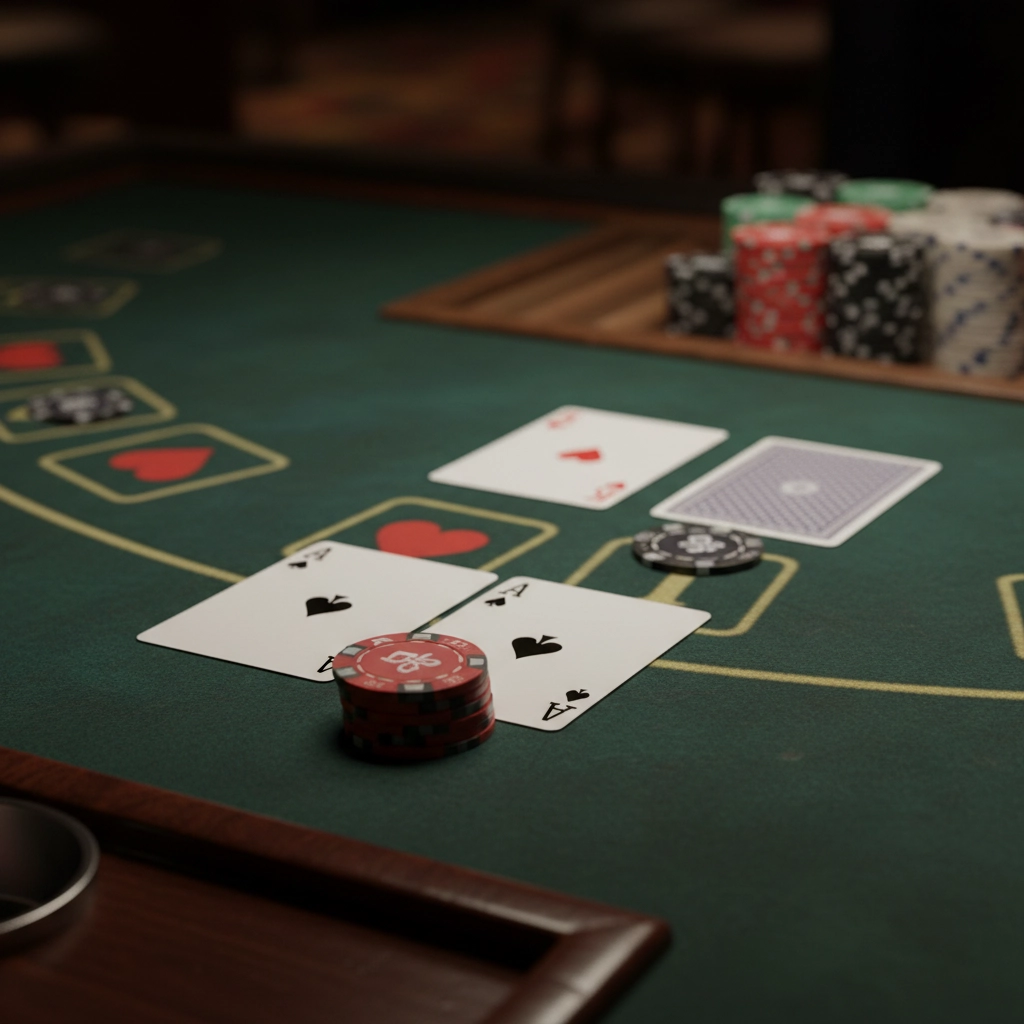
Putting It Into Practice
Now that you know how hands are played, how to read the dealer’s upcard, and how bets are resolved, the next step is practical application: practice decision-making, manage your bankroll, and choose tables with favorable rules. Use training apps or low-stakes games to build confidence, and always confirm the table’s payout and rule variations before you sit down. For deeper rule comparisons and strategy resources, reputable sites like Wizard of Odds can be a helpful reference.
Finally, play respectfully, avoid distractions during rounds, and stick to the strategy choices that match the specific table rules you’re facing. Small, consistent correct decisions are what matter most over many hands.
Frequently Asked Questions
Is taking insurance ever a good play?
Insurance is generally not a good bet for basic strategy players because it has a negative expected value over time. It only makes sense if you are counting cards and know the remaining deck is rich in tens; otherwise, decline insurance and play your hand according to basic strategy.
How do I choose the best table to play at?
Look for tables that pay 3:2 for blackjack rather than 6:5, where the dealer stands on soft 17, allow doubling after splits, and use fewer decks when possible. Also confirm minimum/maximum bets fit your bankroll. These rule and structure choices lower the house edge and improve your expected return.
Can I use a basic strategy chart at a live table?
Policies vary by casino. Some allow small laminated charts at the table, others prohibit reference materials and electronic devices. It’s safest to memorize the basics or ask the dealer or pit staff about permitted items before the round starts.