

Why single-deck blackjack needs its own basic strategy
When you move from multi-deck shoes to a single-deck game, the proportions of remaining cards change and so does the correct way to play. Single-deck blackjack typically offers a lower house edge, but only if you adapt your decisions. You’ll find that some plays that are right in six-deck or eight-deck games become suboptimal with one deck. Learning the single-deck basic strategy helps you make mathematically sound choices on hits, stands, doubles, and splits so you reduce losses and take full advantage of favorable situations.
In single-deck situations you must pay closer attention to the dealer’s upcard and to the composition of your hand (hard vs. soft totals). Because cards are removed from the deck more quickly, probabilities shift faster during a shoe, and small changes in play can have a larger impact on long-run results. Below are the foundational concepts you should internalize before memorizing a chart.
Key single-deck concepts you should remember
- Hard vs. soft totals: A soft total contains an Ace that can count as 11 without busting (e.g., A-6). Hard totals have no usable Ace or the Ace counts as 1.
- Dealer upcard matters more: The strength of the dealer’s visible card (2 through Ace) heavily influences whether you should be aggressive or conservative.
- Doubling and splitting gain value: With fewer decks, doubling down and splitting at the right time typically increase your expected return more than in multi-deck games.
Practical early rules: hits, stands, doubles, and splits
Before you memorize a full chart, start with a few simple, high-impact rules. These cover the most common decisions you’ll face in early play and help you avoid obvious mistakes at the table.
Hard totals (no usable Ace)
- If you have 17 or higher, stand against any dealer upcard — you’re more likely to bust than improve.
- Hit on 8 or less — you need a better total.
- For totals 12–16, stand if the dealer shows 2–6 (dealer is likely to bust); hit if dealer shows 7–Ace.
Soft totals (Ace counts as 11)
- With a soft 18 (A-7): stand against dealer 2–8, hit if dealer shows 9–Ace (or double when allowed vs. 3–6 depending on specific table rules).
- With soft 13–17 (A-2 through A-6): lean to double against dealer 4–6 when permitted; otherwise hit.
Splitting and doubling basics
- Always split Aces and 8s.
- Never split 10s or 5s — treat a pair of 5s as a 10 that is often best doubled.
- Double down on 10 vs. dealer 2–9 and on 11 vs. dealer 2–10 in most single-deck rules.
These rules give you a solid framework for most hands; next, you’ll see the complete single-deck basic strategy chart and practical examples that show exactly when to deviate based on dealer upcards and table rules.
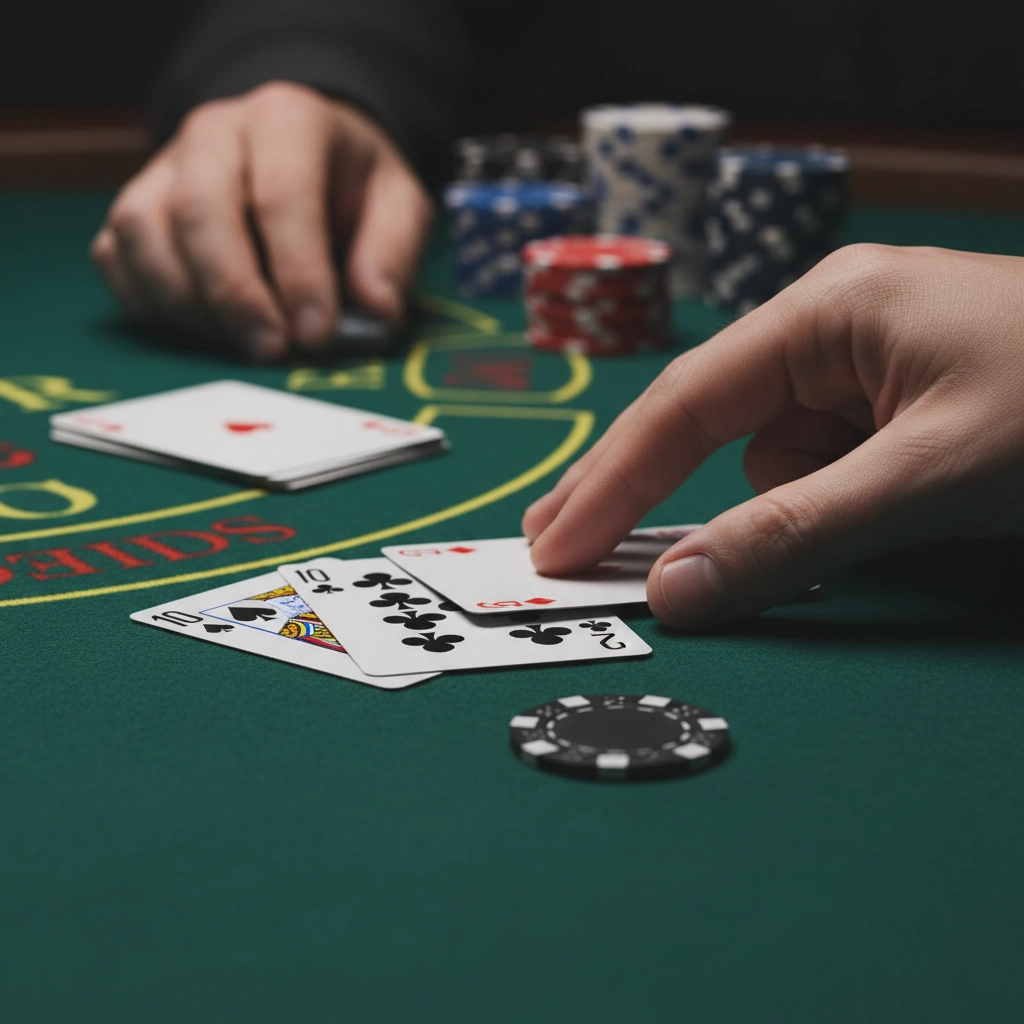
Complete single-deck basic strategy chart (practical guide)
Below is a compact, actionable single-deck strategy you can use at most tables. This assumes typical single-deck rules: dealer stands on soft 17 (S17), doubling allowed on any two cards, doubling after splits (DAS) allowed, and late surrender available. If your table has different rules (H17, no DAS, no surrender), see the next section for how to tweak decisions.
- Hard totals
- 5–8: Hit.
- 9: Double vs. dealer 3–6; otherwise hit.
- 10: Double vs. dealer 2–9; otherwise hit.
- 11: Double vs. dealer 2–10; hit vs. Ace.
- 12: Stand vs. dealer 4–6; otherwise hit.
- 13–16: Stand vs. dealer 2–6; otherwise hit.
- 17–21: Stand.
- Soft totals (Ace counted as 11)
- A,2–A,3: Double vs. dealer 5–6; otherwise hit.
- A,4–A,5: Double vs. dealer 4–6; otherwise hit.
- A,6: Double vs. dealer 3–6; otherwise hit.
- A,7: Double vs. dealer 3–6; stand vs. dealer 2,7,8; hit vs. 9–Ace.
- A,8–A,9: Stand.
- Pairs: splitting
- A,A: Always split.
- 2,2 and 3,3: Split vs. dealer 2–7; otherwise hit.
- 4,4: Split vs. dealer 5–6 only (if DAS allowed); otherwise hit.
- 5,5: Never split — treat as 10 (double vs. 2–9, otherwise hit).
- 6,6: Split vs. dealer 2–6; otherwise hit.
- 7,7: Split vs. dealer 2–7; otherwise hit.
- 8,8: Always split.
- 9,9: Split vs. dealer 2–6 and 8–9; stand vs. 7,10,A.
- 10,10: Never split — stand.
- Surrender (late surrender)
- Surrender hard 16 vs. dealer 9–Ace when permitted; otherwise follow hit/stand rules.
- Surrender hard 15 vs. dealer 10 when permitted.
Common situational deviations and quick examples
Even with a solid chart, rules and table contexts change optimal play. Here are practical deviations and examples you’ll see at single-deck tables.
- If the dealer hits soft 17 (H17): The house edge increases slightly. Be marginally less aggressive with soft doubles — for example, A,6 against a dealer 3–6 is still a double in most charts, but its value is reduced. If uncertain, follow the chart but avoid exotic squeezes on thin advantages.
- No doubling after split (no DAS): Avoid splitting hands where the post-split doubling is the main source of gain. For example, you might choose not to split 4s or 6s if the casino forbids DAS; instead treat them as a single hand and play according to the hard-total rules.
- Late-surrender example: You hold hard 16 (e.g., 10–6) vs. dealer 10. If late surrender is allowed, surrender — that saves money over hitting or standing. If surrender is not offered, basic strategy says hit (or stand in some compositions); follow the hit/stand rule above.
- Soft 18 example: You have A-7 vs. dealer 9. Chart says hit (or double if allowed vs. specific upcards). Don’t stand — the dealer’s strong upcard makes standing suboptimal.
- Pair of 3s example: With 3–3 vs. dealer 6, split (you’ll often be able to double and exploit the dealer’s weakness). Versus dealer 8, hit instead of splitting.
Practice these exact scenarios with a printed chart or a single-deck trainer app. Repetition will make the chart automatic and help you quickly adjust when table rules differ — a key to extracting the most benefit from single-deck play.
Putting strategy into play
Now that you know the single-deck rules and common deviations, focus on turning that knowledge into routine. Start with short, deliberate practice sessions—use a printed chart or a trainer app until the most frequent decisions feel automatic. When you sit at a table, take a moment to confirm the house rules (S17 vs H17, DAS allowed, surrender availability) and adjust a single line of play if needed. Make conservative bankroll choices while you’re still learning; the lower house edge of single-deck games only matters if you execute the correct plays consistently.
- Carry a small laminated chart or use a phone app for quick reference during practice.
- Practice common hands (hard 12–16, soft 18, and key pair splits) until you respond without thinking.
- When table rules differ, default to the slightly more conservative option and consult a reference like Wizard of Odds single-deck guide to fine-tune adjustments.
Frequently Asked Questions
Can I use a multi-deck basic strategy chart at a single-deck table?
You can, but it’s suboptimal. Multi-deck charts are tuned to different card distributions; using them at a single-deck table increases the house edge. Learn the single-deck chart or memorize the key differences (notably some doubles and splits) to gain the full benefit of single-deck play.
How do variations like H17 or no DAS change single-deck decisions?
Rule changes matter. H17 increases the house edge and slightly reduces the value of some soft doubles; no DAS makes splitting certain pairs (e.g., 4s or 6s) less profitable. If the table deviates from S17/DAS, follow the conservative alternatives mentioned in the article and consult a rule-specific chart when possible.
Is card counting necessary to beat single-deck blackjack?
No. Card counting isn’t necessary to play optimal basic strategy, but it can provide an additional edge for skilled players in single-deck games because the impact of removed cards is larger. For most players, mastering single-deck basic strategy and proper bankroll management is the practical way to minimize losses and maximize enjoyment.