
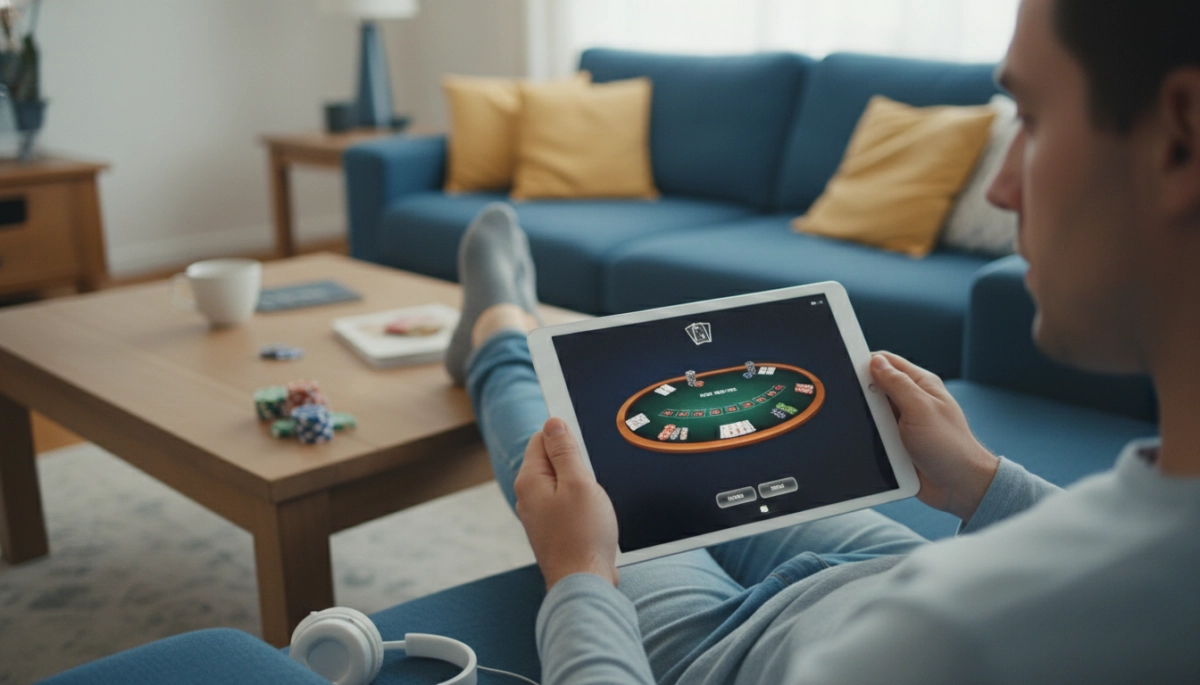
Why practicing blackjack online is a smart first step for any player
You can learn faster and lose less money when you practice blackjack with free online tools before playing for real stakes. These apps and simulators let you repeat hands, test decisions in controlled conditions, and build the muscle memory needed to follow basic strategy without pressure. Because blackjack is a game of decisions rather than chance alone, practicing correct plays can meaningfully shift the odds in your favor over time.
When you use a simulator, you control the variables: number of decks, dealer rules, hitting or standing on soft 17, and whether doubling and splitting are allowed. That means you can practice the exact rule set you’ll face at a casino or with an online table. Simulators also let you practice specific skills—like late-position strategy, surrender decisions, or bankroll management—so each practice session has a clear learning objective.
Free tools suit every level of player. If you’re new, you’ll focus on learning the basic strategy matrix and understanding hand values. If you already know the basics, you can drill advanced topics like card counting, shuffle tracking concepts, or optimal betting ramps. Because most apps track session statistics, you’ll see measurable improvement in hit/stand accuracy, return on simulated bankroll, and error rates over time.
What kinds of free blackjack practice tools are available and what they do
Not all free blackjack tools are created equal. Knowing the common types helps you pick tools that match your goals:
- Web-based simulators: Run in your browser and simulate thousands of hands quickly. Good for statistical practice and testing strategy changes across many hands.
- Mobile apps: Offer touch-friendly interfaces for practice on the go. Many include tutorials, practice modes, and offline play.
- Strategy trainers: Prompt you to make each decision and compare it to basic strategy, often scoring your accuracy and speed.
- Card-counting drills: Help you practice running counts, speed drills, and true count conversion under timed conditions.
- Hand-replay tools: Let you review and replay specific hands to analyze mistakes and alternative plays.
- Multiplayer practice tables: Simulate social table dynamics so you can practice making decisions with seat position and bet sizing in mind.
Key features to look for in a practice app or simulator
When selecting a free tool, pick one that mirrors the play environment you want to master. Important features include:
- Customizable rules (decks, dealer hits/stands, doubling/splitting options)
- Basic strategy overlay or trainer mode to correct mistakes in real time
- Statistics tracking (accuracy, win rate, simulated bankroll)
- Card-counting modes and adjustable shuffle penetration for realistic counting practice
- Hand history export or review features so you can analyze key mistakes
- Low-friction interface and no forced purchases that block practice time
With a clear sense of the tool types and key features, you’re ready to evaluate specific apps and simulators and learn how to use them effectively in focused practice sessions. In the next section you’ll explore the top free apps and step-by-step drills to start improving immediately.
Recommended free apps and simulators (what to try first)
When you’re ready to pick a specific tool, start with one app or simulator for each training goal rather than trying to master everything at once. A balanced set might include a high-volume web simulator, a mobile strategy trainer, and a dedicated counting drill. Examples of these tool types you’ll find for free online include:
- Web simulators: Use these for fast, repeatable hands and large-sample testing. Good sites provide customizable rules (decks, dealer hits/stands, surrender) so you can mirror a casino variant and run thousands of hands in minutes to see long-term outcomes.
- Mobile strategy trainers: These apps prompt decisions on each hand and give immediate feedback versus the basic strategy. They’re excellent for building instinctive responses and improving decision speed while you’re commuting or waiting in line.
- Counting and timed drills: Dedicated counting apps and web drills let you practice running counts, convert to true counts, and do speed work under timed pressure. Look for adjustable shuffle penetration and increasing difficulty levels.
- Hand-replay and session review tools: Use these when you want to analyze mistakes. They let you replay hands, tag errors, and export histories for study.
Two widely used free resources to look for are well-known strategy/simulator web pages that include calculators and rule customization, and counting-focused sites or apps that offer timed drills and accuracy tracking. When evaluating any free tool, confirm it lets you change deck count and dealer rules, doesn’t force paywalls that block practice time, and provides session statistics or exportable hand histories.
Four focused drills to improve quickly (step-by-step)
Use short, repeatable drills with explicit goals. Set a timer and track progress. Below are four drills you can run in any decent simulator or app.
-
Basic strategy rapid-fire (15–25 minutes)
– Settings: the rule set you expect to play (e.g., 6 decks, dealer stands on soft 17).
– Drill: Run 50–200 single-hand prompts where you must choose hit/stand/double/split/surrender. No hints.
– Goal: 90%+ decision accuracy; track common errors and repeat the drill until improvement is steady. -
Betting ramp and bankroll session (30–45 minutes)
– Settings: realistic table limits and your target bankroll. Use a simulator that tracks bankroll over hands.
– Drill: Play sessions of 100–500 hands using a predetermined bet ramp (flat small bets for 100 hands, then progressive increase on wins). Practice stop-loss rules and drawdown limits.
– Goal: Learn discipline under swings and measure simulated ROI and max drawdown to refine bet sizing. -
Card-count speed and true-count conversion (10–20 minutes)
– Settings: timed card streams or shoe runs with adjustable penetration.
– Drill: Run several 60–120 second speed drills where you count and then report the running count and true count for different shoe depths.
– Goal: Improve accuracy and reduce time per deck; aim for 95%+ accuracy at your target speed. -
Hand-review and mistake correction (20–40 minutes)
– Settings: play or simulate a session and export or mark hands you lost.
– Drill: Replay 20–50 flagged hands, identify the mistake (rule, strategy, bet sizing), and write a short corrective note or create a flashcard for that scenario.
– Goal: Turn repeated errors into targeted micro-lessons so the same mistakes stop happening during rapid drills.
Rotate these drills across practice days—short daily sessions keep skills sharp while longer weekly sessions test endurance and bankroll management. Track metrics (accuracy, time, bankroll swings) and adjust difficulty as you improve so practice stays challenging and productive.
Turning practice into real-table confidence
Practice tools are only as valuable as the habits they create. Use your simulator sessions to build reliable routines—warm-up drills, quick strategy checks, and a short review of mistakes—then carry those routines into live play at low stakes. Treat early real-money sessions as controlled experiments: limit buy-ins, set clear stop-losses, and focus on executing decisions you’ve already trained until they feel automatic.
Final tips for steady improvement
- Keep practice short and consistent: daily 10–30 minute drills beat sporadic long sessions for skill retention.
- Match the rule set: always practice with the same decks, dealer rules, and options you’ll face at the table.
- Track specific goals: decide on measurable targets (accuracy %, bankroll drawdown limit, counting speed) and revise them as you improve.
- Transition deliberately: move from free play to low-stakes tables, then scale up only when your metrics stay within your comfort zone.
- Use reputable reference material for strategy and rule clarifications, for example Wizard of Odds — Blackjack.
Keep learning, stay disciplined, and let practice be the bridge between knowledge and confident play at the tables.