
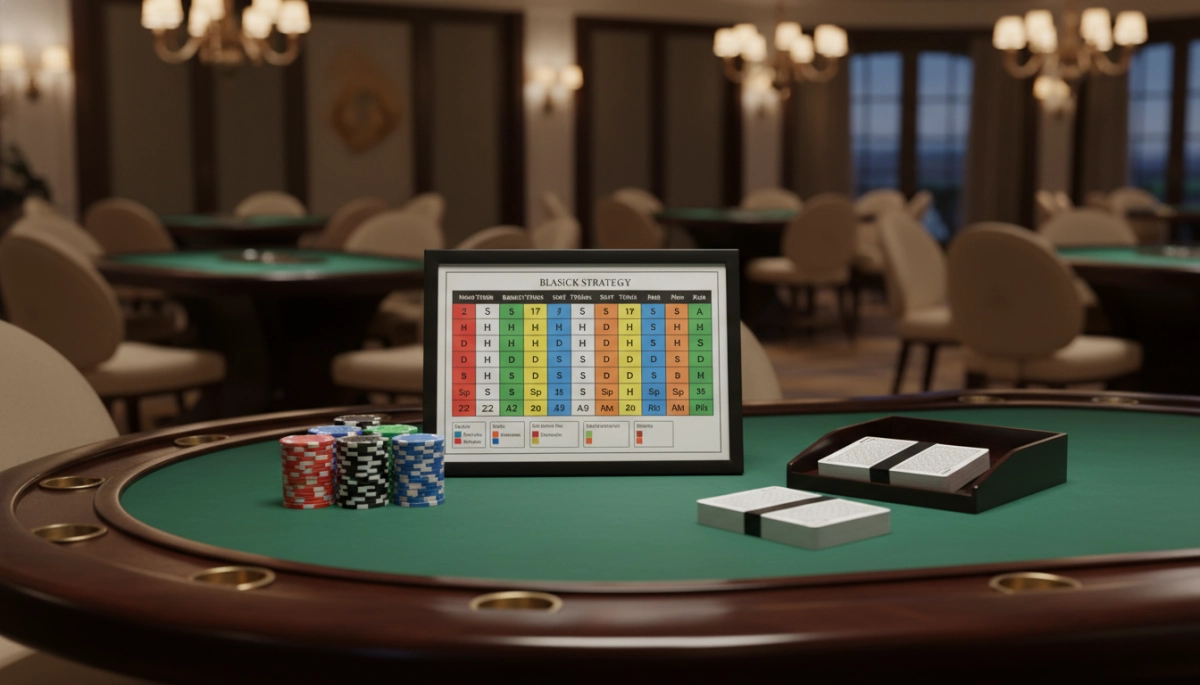
How multiple decks change the way you should play blackjack
When you sit down at a multi-deck blackjack table, you’re not just facing more cards — you’re facing different math. Basic strategy charts tell you the statistically best play for any player hand versus any dealer upcard, but the number of decks affects card removal probabilities and therefore some small but important strategic shifts. If you learn the correct multi-deck chart and follow it consistently, you’ll reduce the house edge and make better decisions under pressure.
Why a separate chart is necessary for multi-deck shoes
You might think a single-deck strategy works everywhere, but deck count alters the frequency of tens and aces and changes the likelihood of dealer blackjack. As a result, actions like doubling, splitting, and standing can shift by one or two spots compared to single-deck charts. A multi-deck chart accounts for those shifts so you know when to be aggressive (double or split) and when to be conservative (stand or hit).
How to read a multi-deck basic strategy chart quickly
A typical chart is laid out with your hand totals down the left and the dealer’s upcard across the top. Familiarize yourself with the three core blocks: hard totals, soft totals, and pairs. Once you know which block your hand belongs to, read across to the dealer upcard and follow the recommended action.
- Hard totals — hands without an ace or where the ace counts as 1. These often focus on when to hit, stand, or double.
- Soft totals — hands containing an ace counted as 11 (e.g., A-6). Soft hands allow more doubling because the ace reduces bust risk.
- Pairs — whether to split or not. Some splits are mandatory in strategy (e.g., 8s and aces) while others depend on the dealer card and deck count.
Quick reading tips for use at the table
- Always determine whether your hand is hard, soft, or a pair before consulting the chart.
- Memorize the most common scenarios: hard 16 vs dealer 10, soft 17 vs dealer 10, and pair of 8s vs dealer 10.
- When in doubt under time pressure, default to the chart’s standing recommendations for higher dealer upcards and hitting recommendations for lower ones.
Rule differences that change chart recommendations
Besides deck count, table rules such as whether the dealer hits soft 17 (H17) or stands (S17), double-after-split (DAS) availability, and surrender options will alter the optimal moves. For example, if the dealer hits soft 17, you should be slightly more cautious on soft totals. If surrender is allowed, certain hard totals become candidates for early surrender. The multi-deck chart you use must match the specific rules of the game you’re playing.
With this foundation you can confidently approach a multi-deck strategy chart; next, you’ll learn the exact move table for common multi-deck rule sets and how to memorize the most critical plays for fast, accurate decision-making at the table.
Multi-deck move guide for common rule sets
Below are the practical, table-ready recommendations you can use at most casino multi-deck games (4–8 decks). These reflect the standard S17/DAS game (dealer stands on soft 17; double after split allowed). I’ve broken the moves into hard totals, soft totals, and pairs so you can scan quickly at the table. After that I’ll note the most common rule exceptions and the small adjustments they require.
Hard totals (4–8 decks, S17/DAS)
- 17 and up: always stand.
- 13–16: stand vs dealer 2–6; hit vs 7–A.
- 12: stand vs dealer 4–6; hit vs 2–3 and 7–A.
- 11: double vs dealer 2–10; hit vs Ace.
- 10: double vs dealer 2–9; hit vs 10–A.
- 9: double vs dealer 3–6; hit vs 2 and 7–A.
- 8 and below: always hit.
Soft totals (A counted as 11)
- A,8 / A,9: always stand.
- A,7: double vs dealer 3–6; stand vs 2,7,8; hit vs 9–A.
- A,6: double vs 3–6; otherwise hit.
- A,5 / A,4: double vs 4–6; otherwise hit.
- A,3 / A,2: double vs 5–6; otherwise hit.
Pairs
- Aces and 8s: always split.
- 2s and 3s: split vs dealer 2–7; otherwise hit.
- 4s: generally don’t split; hit, except split if casino rules allow splitting to get favorable doubles (rare).
- 5s: never split—play as hard 10 (double vs 2–9).
- 6s: split vs dealer 2–6; otherwise hit.
- 7s: split vs dealer 2–7; otherwise hit.
- 9s: split vs dealer 2–6 and 8–9; stand vs 7, 10, Ace.
- 10s (including face cards): never split—always stand.
Rule variations and adjustments
- H17 (dealer hits soft 17): be slightly more conservative on soft hands — reduce doubling frequency on A,7 and lower soft totals and prefer standing less often against mid upcards.
- No DAS (double after split not allowed): avoid splitting 2s/3s and 7s vs dealer 7 and higher; favor hitting instead of splitting marginal pair situations.
- Surrender allowed: early/late surrender changes strategy for hard 15 and 16. If late surrender is available, surrender hard 16 vs dealer 9–A and hard 15 vs dealer 10 in most multi-deck games.
Memorization techniques and quick in-game shortcuts
Knowing every square of a chart takes time. Use these targeted drills and mental shortcuts so the most important moves become automatic when you’re at the table.
- Flashcard batches: make three sets (hard, soft, pairs). Drill one set per day for short 10–15 minute sessions. Repeat until you can recall answers without looking.
- Pattern memorization: learn anchor rules that cover the majority of situations — e.g., “Stand 13–16 vs 2–6,” “Double 10/11 vs most upcards below 10,” “Always split A and 8.” These five anchors resolve a large share of hands.
- Mini‑rules for pressure: if uncertain, default to stand vs dealer 7–A when your total is 12–16 (to avoid busting), and default to hit vs dealer 2–6 when you have 8–12 only when the chart clearly directs it.
- Practice apps and timed drills: use phone apps that simulate multi-deck rules and force decisions under a clock — this builds speed and confidence.
- Table checks: before betting, confirm the table rules (S17/H17, DAS, surrender). If rules differ from your practiced chart, pause and recall the file of adjustments (listed above) rather than guessing on the fly.
With the chart rules and these memory tactics you’ll handle the bulk of multi-deck decisions confidently. In the next section we’ll cover real-table scenarios and how small deviations from perfect play affect the house edge.
Real-table scenarios and the practical cost of small deviations
At live tables you’ll face distractions, unusual hands, and occasional pressure from seatmates. Small departures from basic multi-deck strategy — taking an extra hit, refusing to split when recommended, or doubling when the chart says hit — don’t ruin a session in isolation, but when repeated they add up.
- Common costly deviations: standing on a hard 12 vs dealer 2–3 when the chart says hit, failing to split 8s, or refusing to surrender when the option is available. Each repeated mistake increases the casino’s edge incrementally.
- Frequency matters: an error on a rare decision barely affects long-term results; the same error on frequent totals (12–16, 9–11) compounds quickly.
- Use a tracking mindset: if you notice a recurring weak spot in your play, target that decision for focused practice rather than trying to relearn the entire chart at once.
To study real hands, compare your play to reputable sources and simulators that model multi-deck S17/DAS rules. For reference material and downloadable charts, check a trusted resource such as Wizard of Odds multi-deck strategy.
Final thoughts on playing multi-deck blackjack
Learning and using the correct multi-deck basic strategy chart is the single most effective step you can take to lower the house edge and make better choices at the table. Commit to a few anchor rules, practice the common decision points until they’re automatic, and always confirm table rules before you sit down. Over time, disciplined chart-based play—not intuition—produces the most consistent results.