
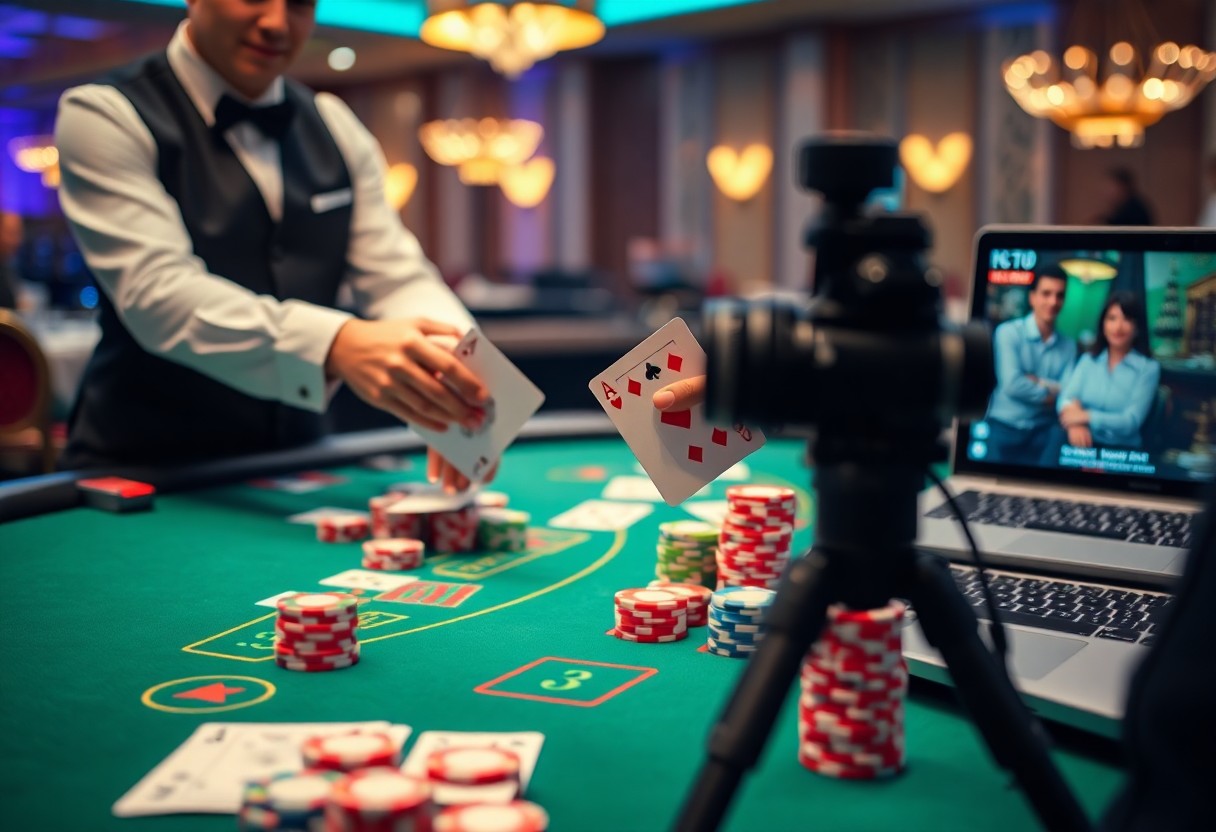
This guide argues that human intuition remains vital when playing live dealer blackjack because it detects subtle dealer tells and irregularities, anticipates shifts in table dynamics, and strengthens decision-making under pressure; intuition helps players avoid fraud or collusion and achieve better risk management while complementing statistical strategy and live observation.
Understanding Human Intuition in Blackjack
Seasoned players convert subtle table cues into split-second choices: noticing a dealer’s handling rhythm, a player’s betting cadence, or shoe penetration can shave off decision time to about 1-2 seconds, while improving situational play. Experience drives quicker recognition of profitable deviations from basic strategy and helps manage tilt under variance, so intuition often complements rather than replaces probabilistic tools at the live table.
Types of Intuition
Intuition in live blackjack splits into several practical forms-sensory reads, pattern-based judgment, emotional sensing, and situational forecasting-each guiding different decisions from when to press a bet to when to stand pat. For example, pattern recognition flags repeated dealer sequences, while social intuition detects hesitation in opponents’ bets. This frames how players choose between instinctive plays and calculated deviations.
- Pattern recognition – spotting recurring dealer or shoe behavior
- Emotional sensing – reading opponents’ confidence or tilt
- Timing intuition – sensing optimal bet windows
- Situational forecasting – anticipating shoe penetration and risks
| Pattern recognition | Example: noticing repeated low-card runs; Impact: alters betting tempo |
| Emotional sensing | Example: opponent hesitation after losses; Impact: exploitative raises or freezes |
| Timing intuition | Example: betting when dealer speed slows; Impact: better advantage moments |
| Situational forecasting | Example: predicting shallow shoe penetration; Impact: conservative play |
| Risk gut | Example: avoiding big bets on noisy tables; Impact: bankroll protection |
Factors Influencing Intuition
Experience, fatigue, table conditions, bankroll pressure, and dealer behavior shape intuition: a pro with thousands of live hands reads subtle tells faster, while sleep loss or alcohol degrades split-second calls. Crowded or fast-paced tables increase error rates and skew perceived streaks. Recognizing how these variables bias instinct helps adjust reliance on gut plays.
- Experience – volume of live hands played
- Fatigue – mental depletion and slower reads
- Table conditions – speed, noise, deck count
- Bankroll pressure – stress-driven deviations
Delving deeper, quantified experience often separates reliable intuition from misleading hunches: players logging thousands of live hands can internalize dealer rhythms and typical shoe composition, while novices misattribute variance to “streaks.” Environmental factors matter too-higher table speed and loud floors increase error probability, and alcohol raises risk tolerance. Behavioral factors like tilt or short bankrolls prompt larger-than-warranted bets, producing predictable leaks; adjusting bet sizing and taking breaks mitigates those biases. Recognizing these influences allows players to calibrate when to trust instinct and when to follow statistical strategy.
- Volume – hands played improves pattern calibration
- Environment – noise and speed alter perception
- Psychology – tilt and stress skew risk assessment
The Role of Live Dealers
Live dealers shape tempo, information flow and trust at the table: they control shoe speed, announce outcomes, and offer visual confirmation of shuffles, which operators report can extend sessions by 25-40%. That extended play alters bankroll dynamics and decision windows, creating opportunities for pattern recognition, while also introducing human error that can slightly shift expected variance compared with automated dealing.
The Interaction Experience
Dealer-player interaction affects behavior: friendly banter and real-time eye contact increase engagement and can reduce impatience, and studies or operator reports often show social tables increase average session length and deposit retention by measurable margins. Players also adjust bet-sizing under social pressure and respond to subtle dealer cues, making table psychology as important as pure probability for strategy execution.
Comparing Live Dealers to Automated Options
Live-dealer blackjack trades throughput for transparency and atmosphere: typical live tables deal roughly 50-70 hands per hour, whereas automated RNG tables can run 250-400 hands per hour, affecting EV realization and volatility. Live tables offer perceived fairness and human pace, while RNG options excel at speed, repeatability, and rigorous RTP disclosure-so choice depends on goals: immersive play versus high-volume strategy testing.
Operators running A/B tests frequently find mixed results: live lobbies convert better for retention and VIP acquisition, while RNG formats produce higher short-term turnover and lower operational costs. In practice, a player seeking controlled simulation will use RNG sessions to accumulate data across hundreds of hands, whereas a player valuing table dynamics and subtle informational cues will prefer live play despite slower hand rates and occasional dealer mistakes.
Live Dealer vs Automated (RNG): Key Differences
| Live Dealer | Automated (RNG) |
|---|---|
| Hands per hour: ~50-70 | Hands per hour: ~250-400 |
| Human interaction: banter, non‑verbal cues, pacing | No interaction: consistent, rapid play |
| Perceived fairness and higher engagement; occasional human error | Transparent RTP, minimal human error, scalable throughput |
| Best for social play, retention, VIP tables | Best for data-driven testing, high-volume grinding |
Tips for Enhancing Your Intuition
Sharpening your intuition requires disciplined drills: log outcomes across 1,000+ hands, drill basic strategy until deviations are reflexive, and time decisions to under 3-5 seconds in mock live sessions. Limit stakes to 1-2% unit risk, review every 100 hands, and use live-dealer streams to practice reading dealer cues and bet flow; a player who tracked 1,200 hands moved correct deviations from 60% to 82% in two months. This focused routine accelerates pattern recognition and safer bet sizing.
- Practice: 30-60 minute micro-sessions, 100-200 hands logged
- Game review: review errors every 100 hands, target basic strategy errors <3%
- Table dynamics: note shoe penetration, dealer tendencies, and bet flow each shoe
- Bankroll: cap risk at 1-2% per hand
Practice and Experience
Allocate structured blocks: 500 simulated hands and 500 live-dealer hands weekly, then analyze sessions in 100-hand batches to cut basic strategy errors below 3% and speed routine decisions to under 4 seconds. Accumulating 4,000-5,000 hands typically yields measurable improvement; one cohort shifted from a -0.5% to +0.8% ROI after focused practice. Emphasize repetition, timed drills, and post-session notes to turn knowledge into instinct.
Reading the Table Dynamics
Scan seat stacking, recent outcomes, and dealer behavior: if shoe penetration exceeds ~70% the dealer’s bust rate can rise toward 30% in some samples, and heavy splitting/doubling by opponents alters short-term deck composition-adjust bet sizing and deviation thresholds accordingly. Track who consistently bets large, who plays tight, and when the dealer shows fatigue or predictable patterns; those signals change optimal, on-the-spot choices.
More detail: mark three items each shoe-penetration level, top two players’ betting trends, and any dealer repeat tendencies (e.g., standing on soft 17). If the dealer’s upcard is 6, penetration >70%, and the table is passive (most players standing), the dealer bust likelihood rises-consider marginally tighter deviation choices and a conservative unit increase of +1 when indicators align. Note tells like rushed bets or long pauses before doubling; they often reveal hand strength and should influence immediate sizing and split/double decisions.
Pros and Cons of Relying on Intuition
Pros and Cons
| Pros | Cons |
|---|---|
| Faster decision-making under time pressure | Emotional bias (tilt) leads to poor choices |
| Pattern recognition of dealer rhythms and table flow | Misreading randomness as a pattern |
| Ability to exploit subtle dealer errors or pauses | Overvaluing weak “tells” that are unreliable |
| Reduced analysis paralysis in live, social settings | Frequent deviations from proven basic strategy |
| Adaptive responses to unusual shoe composition | Small-sample illusions; false confidence from short runs |
| Improved social bluffing and table image control | Higher variance and potential bankroll erosion |
| Enhanced situational betting (timing bet sizes) | Confirmation bias: seeking cues that justify bad plays |
| Can complement counting or strategy when trained | Can mask lack of technical skill if over-relied upon |
Benefits of Intuitive Play
Seasoned live players convert pattern recognition into practical edges: after 1,000+ hands many make instantaneous split/double decisions that mirror basic strategy while also spotting dealer rhythm changes. That speed keeps table etiquette, increases hands dealt per hour, and lets you react to real-time imperceptible cues-for example, exploiting a dealer’s repeated hesitation on hole cards to adjust bet timing and extract small, repeatable advantages.
Risks and Pitfalls
Intuition often trades statistical rigor for quick judgment, and deviating from basic strategy can raise the house edge by more than 1 percentage point on common mistakes (e.g., standing/hitting errors on 12-16 vs dealer 7-10). Cognitive traps like confirmation bias and gambler’s fallacy make isolated wins feel predictive, prompting larger bets that amplify variance and accelerate bankroll decline.
Further, overconfidence in supposed “tells” or short winning streaks creates survivorship bias: players recall hits and forget long-term losses. In practice that leads to repeated small strategy errors-each one adding to the cumulative edge the house holds. Discipline through metrics (tracking deviation frequency, ROI per 1,000 hands) and strict bankroll rules reduces the downside of intuitive decisions and separates informed instincts from costly impulse plays.
Step-by-Step Guide to Intuitive Decision Making
Step Breakdown
| Step | Action |
|---|---|
| Assessing Situations | Scan dealer upcard, decks (usually 6-8), shuffle penetration and table pace to gauge immediate risk. |
| Making Informed Choices | Apply basic strategy (house edge ≈ 0.5% typical), then make small, disciplined deviations based on rules and shoe state. |
| Quick Example | Against a dealer 6, standing on marginal 12 often reduces loss; penetration >65% amplifies that signal. |
Assessing Situations
Scan the dealer’s upcard, discard tray and table rules-most live tables use 6-8 decks and run about 30-60 hands/hour. Pay attention to shuffle penetration (deeper penetration increases the value of observed cards) and visible streaks; for instance, when the dealer shows a 6 and you have 12, statistical tendencies favor standing, so let that inform your split-second choice.
Making Informed Choices
Anchor decisions to basic strategy-which cuts the house edge to roughly 0.5% in common 6‑deck games-and treat intuition as a disciplined overlay. Track rule variations like late surrender or double-after-split, adjust bet size modestly when shoe composition or short run patterns (3-5 hands) indicate a shift, and avoid large deviations based on single anomalies.
Delve into rule-driven adjustments: availability of late surrender or double after split (DAS) can shift expected value by tenths of a percent and should change marginal plays. For example, with 16 vs dealer 10, surrender or a conservative approach often lowers expected loss versus aggressive instincts; therefore, use intuition to read short sequences but always map that read back to rule-specific EV impacts and your bankroll limits.
The Impact of Strategy vs. Intuition
Basic strategy can shrink the house edge to about 0.5% under common rules; intuitive deviations typically increase variance and often worsen that edge unless backed by reliable evidence. Experienced players who combine skillful counting or pattern recognition can flip +1-2%+ of expected value for limited stretches, while casual gut plays without data usually erode long-term results.
When to Trust Your Gut
Trust gut instincts when objective, game-specific signals appear: a late shoe showing markedly fewer tens, a dealer repeatedly exposing cards, or a clear shuffle anomaly. Use intuition sparingly-for instance, opting to stand on a marginal 12 vs dealer 2 in a shoe where tens are visibly depleted-and only when your bankroll and volatility tolerance absorb the extra risk.
Balancing Strategy with Intuition
Keep basic strategy as your baseline and permit overrides only with measurable support: reliable true-count cues, consistent dealer tells, or strong discard patterns. In live-dealer games with continuous shufflers, prioritize behavioral reads since counting is ineffective. Enforce bet-sizing discipline and limit intuition-driven deviations to about 5% of hands to protect expected value.
Practical balance means tracking every deviation: log the hand, reason for the override, and outcome, then review after a sample-aim for at least 500 hands before judging effectiveness. Pair that review with strict bankroll rules (risking no more than 1-2% of your bankroll on aggressive plays) so short-term instincts can be evaluated without destroying long-term profitability.
Summing up
Summing up, human intuition remains vital in live-dealer blackjack because it allows players to interpret subtle dealer and table cues, adapt strategy to evolving game flow, detect irregularities or errors, and manage risk and bankroll in real time. Intuition complements statistical strategy by guiding split-second decisions, reading tempo and timing, and leveraging experience where rigid algorithms can’t account for human behaviors that affect outcomes.
FAQ
Q: How does human intuition affect decision-making during a live-dealer blackjack session?
A: Human intuition helps players interpret real-time, nonverbal information that a streamed or in-person dealer and other players provide-timing of card reveals, dealer hesitations, body language, and the table’s pacing. Those cues can indicate irregularities (misdeals, dealer fatigue) or social dynamics (aggressive bettors, timid players) that influence when to hit, stand, double or split within the framework of basic strategy. Intuition also supports split-second judgment in edge cases not covered explicitly by rules, such as responding to a dealer’s obvious error or a downstream action by another player; in those situations, trusting a rapid, experienced read can prevent loss or prompt a timely request for clarification from the dealer or floor staff.
Q: Can intuition help detect dealer or system errors, and what should a player do if they suspect one?
A: Yes. Intuition often flags subtle anomalies-unexpected card sequences, inconsistent payouts, odd camera angles or lag in live streams-and prompts immediate verification. If something seems off, pause betting, call the dealer’s attention calmly, and request a review or floor intervention. For online live-dealer games, capture a screenshot or note the table ID and timestamp, use the in-game chat to report the issue, and escalate to platform support if necessary. Acting swiftly but composedly preserves your claim and helps the operator investigate, while avoiding impulsive play that could worsen the situation.
Q: Does intuition influence bankroll management and table selection in live-dealer blackjack?
A: Intuition aids practical choices like selecting appropriate tables (pace, minimum/maximum bets, dealer style) and deciding when to step away. Players who sense a table’s energy-frequent dealer mistakes, volatile player behavior, or long cold stretches-can switch tables or adjust bet sizes to protect the bankroll. Intuition also helps detect personal tilt: if impatience or frustration rises, stepping back avoids emotionally driven bets. Complement intuition with concrete rules: preset stop-loss and win-goal limits, consistent bet sizing, and scheduled breaks to reduce costly impulsive decisions.