

How splitting and doubling can change your blackjack decisions
When you play blackjack, two powerful options—splitting and doubling—let you turn a single hand into a stronger opportunity. These moves affect your risk and expected return, and they change how you should think about each dealer up-card. This section gives you clear, practical rules so you can recognize when splitting or doubling is allowed and why you might choose one over the other.
Basic mechanics: what happens when you split or double
Splitting: When you’re dealt a pair (two cards of the same rank), you can split them into two separate hands by placing an additional bet equal to your original wager. Each new hand then receives one more card and is played independently.
Doubling: Doubling down means you double your original bet in exchange for committing to stand after receiving exactly one more card. You usually double after seeing your initial two cards and the dealer’s up-card.
Clear rules for splitting pairs you should memorize
When splitting is allowed and common restrictions
Most casinos follow these straightforward rules, but you should always check the table rules before you play:
- You may split any two cards of the same rank (e.g., 8–8, K–K). Some casinos let you split 10-value cards regardless of face vs. 10.
- Aces typically pay special attention: most tables allow splitting aces but give only one additional card to each ace and often prohibit re-splitting aces.
- Re-splitting (splitting again after an initial split) is sometimes allowed up to a set limit (commonly 3-4 hands total); other tables forbid it.
- After splitting, doubling is sometimes restricted—check whether the table allows doubling after split (DAS). Allowing DAS generally improves your odds.
Quick practical advice for common pairs
- Always split aces and 8s. A split ace gives you a chance at blackjack-like hands; two 8s (16) is a weak starting total.
- Never split 10s or face cards. A 20 is a strong hand; splitting reduces expected value.
- Split 2s, 3s, 6s, and 7s against weak dealer up-cards (2–7) based on basic strategy; avoid splitting them against strong dealer cards.
- Split 9s against dealer 2–6 and 8–9, but stand against 7, 10, or ace.
Doubling down: straightforward rules and a few smart tips
When doubling is usually permitted
Most tables allow you to double on any two-card total, though some restrict doubling to totals of 9, 10, or 11. You double by placing an additional bet equal to your original wager and drawing one final card.
Next, you’ll learn exact strategy charts for doubling and splitting against each dealer up-card, plus how soft hands and multiple splits change the recommended play and your risk management going forward.
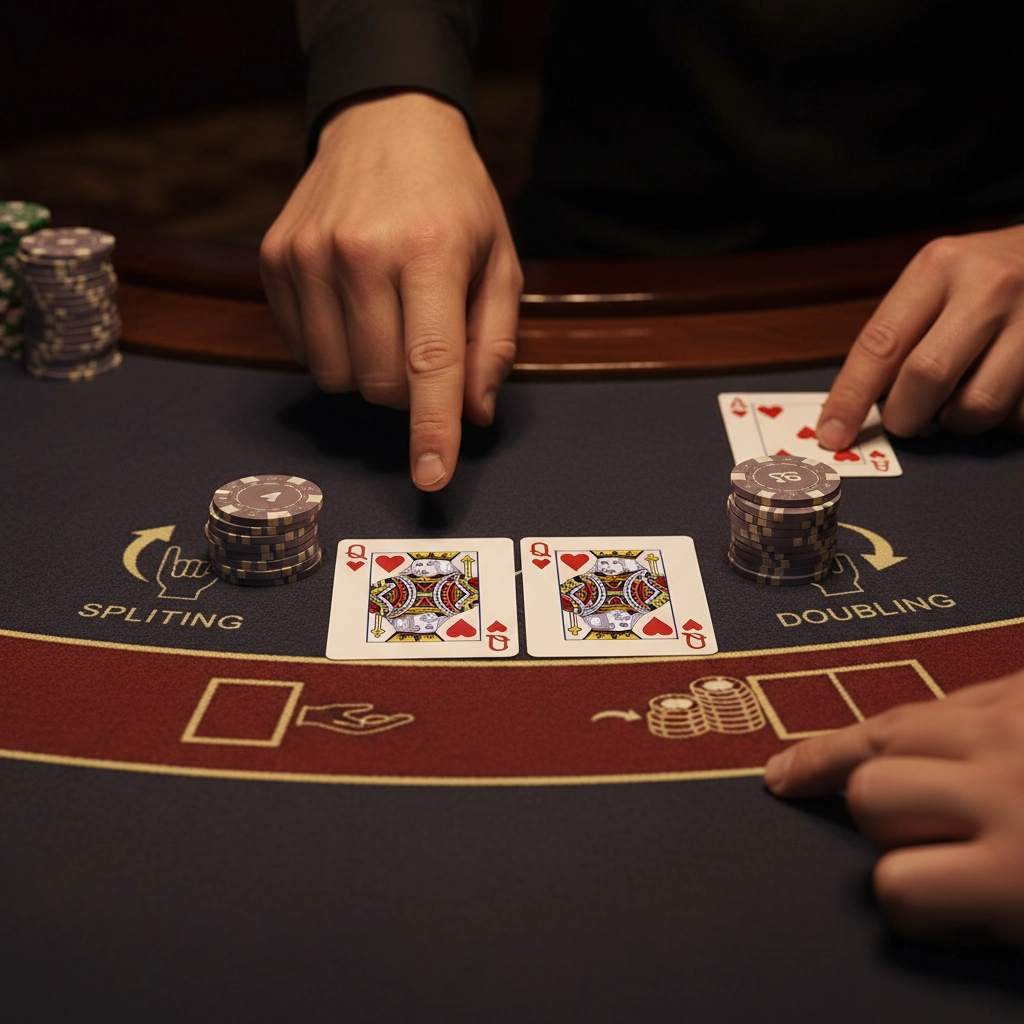
Exact dealer up-card rules for doubling and splitting
Basic strategy reduces to a few clear rules that depend on your two-card total and the dealer’s up-card. Commit these to memory — they cover the vast majority of doubling and splitting decisions.
Doubling (hard totals)
- Hard 9: double against dealer 3–6; otherwise hit.
- Hard 10: double against dealer 2–9; hit against 10 or ace.
- Hard 11: double against dealer 2–10; hit only vs. ace.
Doubling these hard totals gives you the best chance to turn a marginal hand into a strong profit when the dealer shows a weak up-card.
Doubling (soft totals)
- Soft 13–14 (A,2–A,3): double vs dealer 5–6; otherwise hit.
- Soft 15–16 (A,4–A,5): double vs dealer 4–6; otherwise hit.
- Soft 17 (A,6): double vs dealer 3–6; otherwise hit.
- Soft 18 (A,7): double vs dealer 3–6; stand vs dealer 2, 7, 8; hit vs 9–ace.
Doubling soft hands is powerful because the ace gives you flexibility—if the extra card is poor, you aren’t busting outright.
Splitting (dealer up-card guidance)
- Aces and 8s: always split.
- Twos and Threes: split vs dealer 2–7 (more aggressive when doubling after split is allowed); otherwise hit.
- Fours: usually don’t split; split only vs dealer 5–6 in some rule sets.
- Fives: never split—play as a hard 10 (consider doubling instead).
- Sixes: split vs dealer 2–6; hit vs stronger up-cards.
- Sevens: split vs dealer 2–7; otherwise hit or stand depending on dealer.
- Nines: split vs dealer 2–6 and 8–9; stand vs 7, 10, or ace.
- Tens/face cards: never split—20 is a premium hand.
These rules assume common table policies; memorize them and then check the table for variations that affect them.
How soft hands, multiple splits and table rules change strategy — and how to manage the added risk
Table rules and hand composition materially change recommended play and bankroll exposure.
Rule variations that matter most:
- DAS (doubling after split): If allowed, you should be more aggressive splitting 2s, 3s and 7s because you can double strong resulting hands. If DAS is not allowed, treat some splits more conservatively.
- Re-splitting aces: Many casinos forbid it. If re-splitting aces is disallowed, remember split aces get only one additional card — they’re high variance and can’t be improved further.
- Dealer hits/stands on soft 17 (H17 vs S17): H17 slightly favors the house; you may need to tighten doubles against dealer ace/soft totals accordingly.
- Surrender availability: When surrender is allowed, you may surrender certain hands (like 16 vs 10) instead of splitting or doubling into a poor situation.
Multiple splits and bankroll planning
- Every split doubles the number of hands and your maximum possible exposure. If the table allows up to 4 hands after re-splitting, your single original bet could become four bets. Plan bet size so you won’t be forced to forfeit your bankroll or play emotionally.
- Set a practical cap on simultaneous hands you’ll play (for example, don’t risk more than 2–3x your usual bet even if you’re allowed 4 splits).
- If you’re low on chips, avoid aggressive splits that require equal additional wagers—better to play a single conservative hand than overexpose your bankroll.
Practical adjustment tips
- When DAS is allowed, be more willing to split 2s/3s and to double after those splits.
- When DAS is not allowed or re-splitting is forbidden, avoid marginal splits that rely on getting a double or further splits to be profitable.
- Always check the dealer’s soft-17 rule and surrender options before playing — small rule differences change the EV of doubling and splitting decisions.
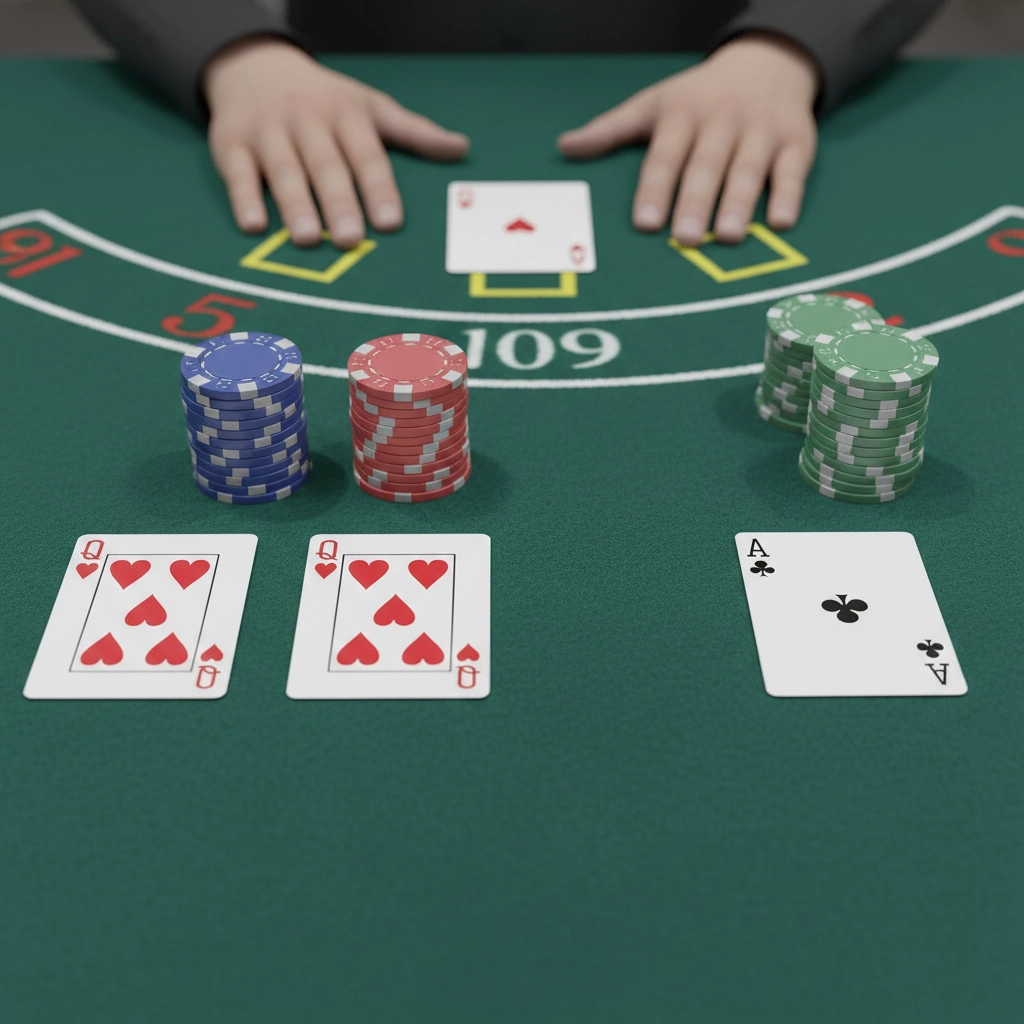
Putting splitting and doubling into play
Mastering splitting and doubling is as much about discipline as it is about memorizing rules. Practice these moves in low-stakes or play-money games until the decision logic feels automatic, set sensible bet limits so splits don’t overexpose your bankroll, and always check table-specific rules before you sit down. Small differences—whether the dealer hits soft 17, whether doubling after a split is allowed, or whether aces can be re-split—change how you should act, so verify the rules and adapt your approach accordingly.
Use reliable strategy references and simple drills to train your reactions. When in doubt at the table, default to conservative bankroll management rather than chasing marginal edges. For basic strategy charts and detailed rule explanations, see Wizard of Odds – Blackjack.
Frequently Asked Questions
Can I double down after splitting a pair?
It depends on the table rules. Some casinos allow doubling after a split (DAS), which often makes certain splits more profitable. If DAS is not permitted, you should play those split hands more conservatively.
Are aces always limited to one additional card after splitting?
Many casinos give only one card to each split ace and prohibit re-splitting aces. Other tables allow re-splitting aces up to a limit. Always check the house rules before assuming how split aces are handled.
How should I adjust bankroll when multiple re-splits are allowed?
Plan for the maximum number of hands you could be forced to play after successive splits. Cap your base bet so that the worst-case exposure (e.g., 3–4 simultaneous hands) stays within your risk tolerance and avoids emotional decision-making at the table.