
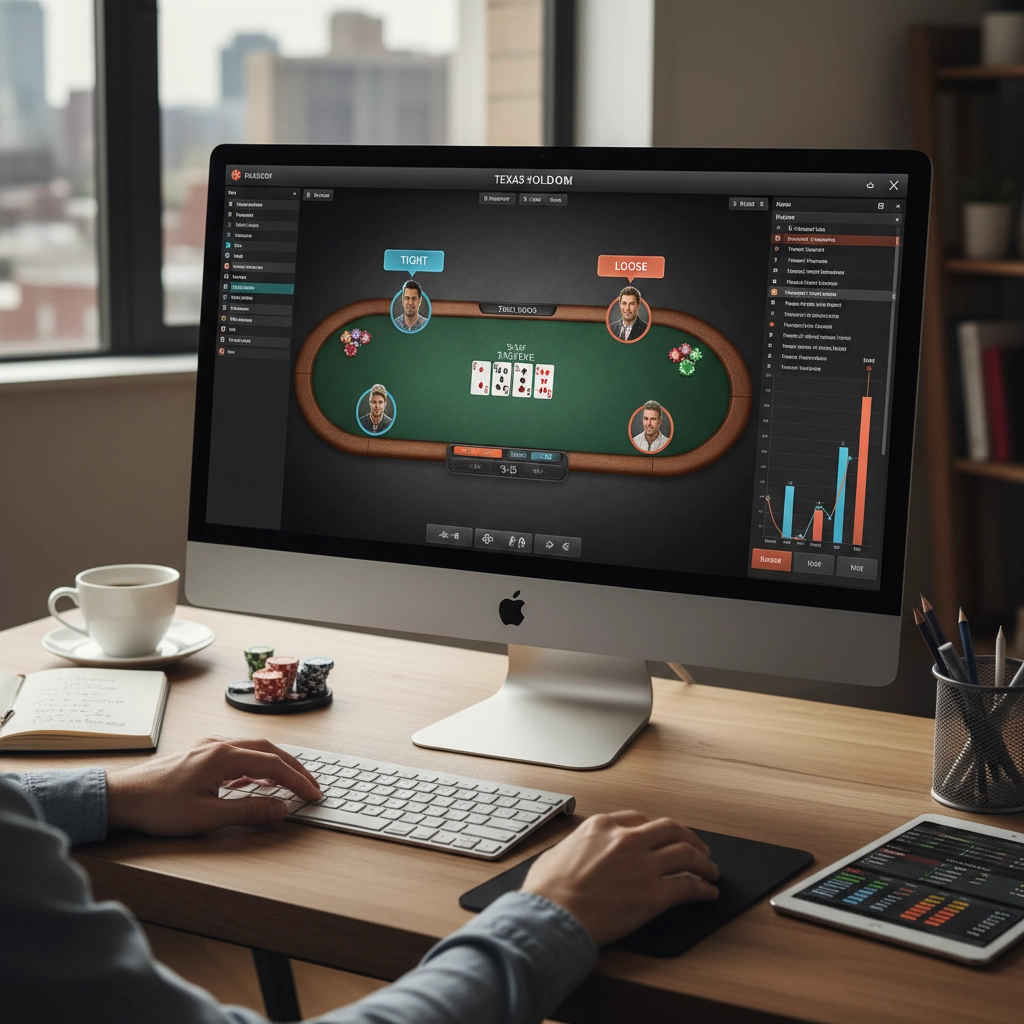
Why tailoring your ranges to tight and loose opponents wins money online
When you play online poker, the cards are the same for everyone, but opponents’ tendencies create profitable edges. You can’t rely on a single “optimal” range every table — you must adapt. By recognizing whether players are tight or loose, and adjusting your opening, defending, and 3-betting ranges accordingly, you turn small edges into consistent profit. This section shows why those adjustments matter and what immediate mindset shifts you should adopt.
Online play gives you additional information — stats, stack depths, and action speed — that make adjustments faster and more reliable than in live games. You should focus on exploitative deviations from GTO: widen and polarize your ranges against certain players, narrow and value-bet heavier against others. Doing so reduces variance and increases long-term expected value (EV).
How to classify opponents quickly and accurately
Before you change your ranges you must classify opponents into tight or loose categories. Use a combination of observable actions and basic HUD stats if available:
- Tight player indicators: low VPIP (10–20%), low PFR, rarely defend blinds, high fold-to-steal. They often fold to aggression and don’t call many marginal hands.
- Loose player indicators: high VPIP (30%+), calls many raises, defends blinds wide, and chases draws. They play more hands from early positions and are willing to see cheap flops.
- Contextual signs: time-bank usage, bet sizing patterns, and postflop tendencies (e.g., giving up to C-bets). Combine these with HUD numbers to avoid mislabeling a single-session outlier.
Basic preflop range rules when facing tight or loose opponents
Once you classify an opponent, apply a few simple preflop rules you can execute without memorizing complex charts:
- Against tight opponents: widen your open-raising range, especially from late positions. Add more speculative hands and steals like Kx, broadway, and suited connectors because tight players will fold too often. Reduce your 3-bet bluff frequency but increase value 3-bets with strong hands — they call less often, so you extract more value by betting for stacks when appropriate.
- Against loose opponents: tighten your opening range and favor hands that perform well in multiway pots and postflop—pairs, suited broadways, and stronger connectors. Increase your 3-bet bluffs selectively against callers who fold to pressure but be careful: many loose players respond by calling wider, so prioritize value 3-bets and larger sizing to punish their loose calling tendencies.
- Positional adjustments: in late position you can exploit tight players by stealing more frequently; versus loose players, tighten your steals and focus on isolation raises when you have position and strong hands.
These principles give you practical, immediate adjustments you can start applying in cash games and tournaments. In the next section you’ll see concrete preflop sizing, 3-bet strategies, and illustrative ranges to implement these concepts at the tables.
Preflop sizing and 3‑bet strategies vs tight and loose players
Sizing is one of the quickest, highest-leverage tools you have for exploiting player types. Small changes in bet size shift the ranges opponents will continue with, so use sizing deliberately.
– Open-raise sizing: make your opens large enough to price out loose callers but not so big that you lose fold equity versus tight players. A good baseline: 2.2–2.5bb from early/middle positions and 2.5–3bb from late positions. Against tight opponents, you can keep opens on the smaller end and increase steal frequency; their fold rates give you equity without bloat. Against loose opponents, bump to the upper end (2.5–3bb) to charge marginal callers and narrow the field.
– 3-bet sizing: size to create the matchup you want. A practical rule is 3x–4x the open (resulting in roughly 7–10bb total when facing a 2.5bb open). Against tight opponents, favor polarized 3-bets — larger for value hands (KQs+, QQ+) and modest-sized bluffs that rely on fold equity (A5s, A2s with blockers). Because tight players fold a lot, keep your 3-bet bluff frequency lower and your value 3-bets bigger to extract when they call. Versus loose opponents who call wide, use 3-bets more for value and isolation: widen your value 3-bet range (TT+, AQs+, AKo) and size up slightly to 4x the open to force them to pay more to see flops.
– Stack depth and tournament context: deep stacks (100bb+) allow more speculative 3-bet bluffs (suited connectors and suited aces); short stacks push you toward straightforward value and shove strategies. In SNGs or MTTs with antes, stealing frequency should increase versus tight tablemates, but be mindful of ICM pressures.
Concrete illustrative preflop ranges you can start using
Below are practical, easy-to-remember ranges (described in words) you can implement quickly. Adjust by position and opponent tendencies.
– From the button vs a tight folded table: open broadly — all pocket pairs, all suited aces, broadway hands (KQ, KJ, QJ), and connectors suited down to 76s plus many Kx offsuit like KTo/KJo. You can add more speculative hands (54s, 65s) because steals have high fold equity.
– From the button vs a loose table: tighten up — keep all pairs, suited broadways (AQs, KQs, QJs), stronger suited connectors (T9s, 98s), and remove marginal off-suit Kx (KTo) and weak suited gappers. Focus on hands that play well multiway or make big top-pair hands.
– 3-betting ranges when facing a single opener from late position: against tight openers, 3-bet small-to-medium with top range: QQ+, AK for value, and add 4–6 bluffs (A5s, A4s, suited connectors) as occasional polarizing plays. Against loose openers, 3-bet primarily for value — QQ+, AK, and mix in fewer bluffs because they call wider.
Postflop plans after taking the adjusted preflop lines
Your postflop approach should flow from the preflop goals: steal the pot vs tight players; extract value vs loose players.
– Against tight opponents: continuation-bet sizing can be smaller (30–45% pot) to fold out missed ranges. When they call, assume a narrower range and apply pressure on later streets. Use blockers to bluff-catch or represent strong hands. Be willing to barrel lighter because tight players make high fold frequency on flop and turn.
– Against loose opponents: use larger c-bets (45–70% pot) on textures that reward value or protect medium-strength hands. Check more marginal made hands to induce bluffs and realize equity cheaply with speculative holdings. When you have a strong hand, size for value and avoid over-bluffing — many loose players will call down with weaker pairs and draws.
These practical sizing rules, ranges, and postflop plans bridge the gap between abstract theory and online table execution. In the next part we’ll refine specific flop textures and give examples of lines to take on different boards against both player types.
Flop-texture lines and quick examples
Here are short, practical lines to take on common flop textures after you’ve already chosen preflop sizing and ranges based on opponent type.
-
Dry ace-high board (A♠ 7♦ 2♣): vs tight callers, use a smaller continuation bet (30–40% pot) to fold out missed ranges; follow up with a turn barrel when checked to if the turn is blank. Versus loose callers, size larger (45–60% pot) or check back marginal hands to induce bluffs later.
-
Wet coordinated board (J♠ T♠ 9♦): against tight players, bet larger with both value and bluffs to fold out strong but non-made hands; don’t over-bluff since they’ll call fewer turns. Against loose players, value-bet thinner and prefer check-calling with medium-strength hands to extract more.
-
Rainbow low board (8♥ 6♦ 3♣): vs tight opponents you can often continuation-bet small and fold to resistance; against loose opponents, bet for protection and thin value — they’ll call with bottom pairs and straight/flush draws more often.
-
Multiway pots: tighten your c-bet range and prioritize hands that play well multiway (pairs, strong draws). Versus loose multiway callers, check more and realize equity; versus tight multiway callers, you can bluff less and focus on thin value lines.
Putting adjustments into practice
Make these adjustments part of a deliberate practice routine: warm up with targeted cash-game or tournament sessions focusing on one opponent type, review hands with a HUD to confirm tendencies, and keep a short checklist (open sizes, 3‑bet plan, flop sizing) at your table until the lines become automatic. Use tools like an equity calculator to verify decisions and to train intuition about ranges rather than memorizing single hands. Small, consistent changes to sizing, range construction, and postflop plans will compound into a measurable edge online.
Frequently Asked Questions
How often should I deviate from GTO ranges when facing very tight or very loose opponents?
Deviate frequently when opponents show clear and stable tendencies — tighten toward exploitative play. Against very tight opponents, increase stealing and bluff frequency where you have fold equity; against very loose opponents, shift toward value-heavy ranges and reduce bluffing. Keep core GTO principles as a baseline and adjust in proportion to the strength of the reads.
Which HUD stats are most useful for adjusting preflop and postflop ranges online?
Focus on three primary stats: VPIP (how wide they play), PFR (how often they open-raise), and Fold to C‑bet (how often they fold on the flop). Combine these with 3‑bet and Fold to 3‑bet stats to shape your preflop and bluffing strategies. Use position‑specific splits when available for more precise adjustments.
How should stack depth and tournament stage change my approach to tight and loose opponents?
With deep stacks (100bb+), incorporate more speculative and deceptive plays (3‑bet bluffs, multistreet bluffs) versus tight players and more isolation/value plays versus loose players. Short stacks shrink ranges and favor straightforward value/shove lines. In tournament late stages, factor in ICM: tighten steals against many short stacks and avoid marginal high-variance gambles unless necessary.