

Why single-deck blackjack matters and how it changes your approach
Playing with a single 52-card deck alters the math compared with multi-deck games. Because cards are not reshuffled as often and card composition is easier to track, single-deck blackjack typically offers a lower house edge—if you use correct rules knowledge and disciplined decision-making. You’ll still rely on the same objective: beat the dealer by getting closer to 21 without going over, but small rule differences (payouts, dealer actions, split/double options) significantly affect the best choices on every hand.
Core single-deck rules every player should know
Before you sit down, confirm the specific table rules—casinos vary—and keep these baseline points in mind. Knowing the exact rule set tells you which plays are mathematically superior and whether side bets or insurance are ever worth considering.
Card values and natural blackjack
- Number cards are worth their face value; face cards (K, Q, J) count as 10; aces count as 1 or 11, whichever benefits your hand most.
- A natural blackjack (an ace + 10-value card dealt as the initial two cards) is usually paid 3:2 at single-deck tables—confirm this, because 6:5 payouts dramatically worsen the house edge.
Dealer actions you must check
- Dealer stands on 17 (soft 17 or hard 17). Most favorable for you is “dealer stands on soft 17” (S17). If the dealer hits soft 17 (H17), the house edge increases slightly.
- Check whether the dealer peeks for blackjack when showing an ace or 10—this affects whether you can safely take insurance and how quickly hands are resolved.
Splitting, doubling, surrender and insurance
- Splitting: Most single-deck games allow splitting pairs. Find out if re-splitting aces or other pairs is permitted—more flexibility reduces the house edge.
- Doubling: Standard double-down rules allow doubling on any initial two-card total; some tables restrict to totals 9–11. Doubling after split (DAS) is an important rule—if allowed, it’s advantageous.
- Surrender: Early and late surrender options let you forfeit half your bet on unfavorable hands. Early surrender is rare but very favorable if available; late surrender is still useful in some spots.
- Insurance: In single-deck play, insurance is almost always a negative expectation play unless you are counting cards and know the deck is rich in tens.
Once you’re comfortable with these rule details and how they affect house edge and hand value, the next step is learning the single-deck basic strategy and simple card-counting adjustments that will let you play each hand closer to break-even or better—we’ll cover that in the following section.
Single-deck basic strategy: how your plays differ from multi-deck charts
Once you’ve verified the table rules, the most important immediate adjustment is switching to a single-deck basic strategy chart. Many of the familiar multi-deck prescriptions change by a small but important margin when only one deck is in play—these margins add up over hundreds of hands.
Key single-deck strategy principles to internalize:
- Hard totals: Be slightly more conservative on marginal hard totals against dealer 10 and ace. Surrender (if allowed) becomes more valuable on hands such as 16 vs 10 or 15 vs 10. If surrender isn’t available, follow the single-deck basic-chart alternative (typically hit 16 vs 10 unless the count indicates otherwise).
- Soft totals: You can be more aggressive doubling soft 18 and soft 19 in single-deck when the dealer shows a weak card—fewer cards mean larger swings from doubling success rates.
- Pairs and splitting: Splitting rules shift subtly—split 2s, 3s and 6s more often when facing dealer 2–6; be conservative splitting 10s (rarely split). If the table permits double-after-split and re-splitting, your splitting frequency should increase accordingly.
- Doubling: Single-deck play favors doubling on 9–11 slightly more often than some multi-deck charts indicate. Confirm whether doubling on any two cards is allowed; if so, apply the single-deck doubling chart.
Don’t memorize a multi-deck chart and expect it to be optimal—carry or study a single-deck chart and drill it until decisions are automatic. Small changes in four or five marginal hands are what turn a near-break-even session into a profitable one over time.

When and how to adjust with simple card counting
Single-deck games are the easiest environment to apply a simple counting system because the remaining cards are transparent and true-count conversion is trivial. A popular, low-effort method is the Hi‑Lo system: +1 for 2–6, 0 for 7–9, and −1 for 10s and aces. Keep a running count, then divide the running count by the number of decks remaining (with one deck this is usually the running count divided by a fraction, so true count estimation is simple).
Practical, low-risk counting adjustments to incorporate:
- Insurance: Only consider insurance when the true count indicates a deck rich in tens. As a working rule, insurance becomes attractive at noticeably positive counts—don’t take it by default.
- Bet sizing: Increase bets when the count is positive and the deck is rich in high cards; decrease bets when the count is negative. Keep your spread conservative (for most recreational players, 1–4 times your minimum bet) to reduce attention from casino staff.
- Play deviations: Positive counts favor standing and doubling more often—if the deck has more tens, your doubled hands are more likely to get 10s to finish strong. Conversely, a negative count means be more cautious on doubling and splitting.
Memorize a few high-value deviations rather than dozens. Practice them in simulations so you can convert running counts to practical decisions quickly. Always account for rules: deviations that are profitable under one rule set may not be under another.
Practical table tactics: bankroll, bet spread and camouflage
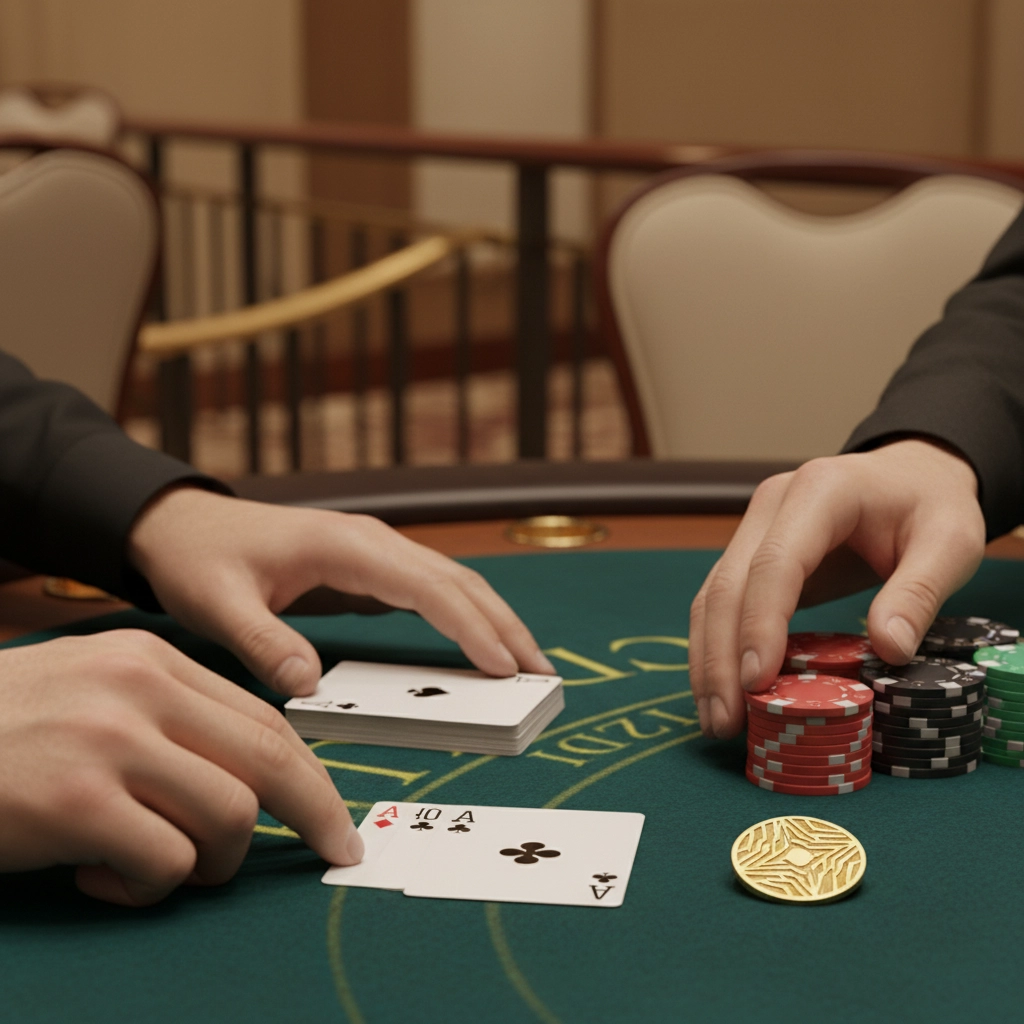
Even with perfect strategy and counting, table selection and bankroll management determine your session success. Use a unit-based bankroll (e.g., 100–200 units for serious play), keep bet spreads modest to avoid detection, and choose tables with favorable rules (3:2 payout, dealer stands on soft 17, DAS allowed). Move tables if the cut card is placed very deep—single-deck value evaporates when most of the deck is removed before reshuffle.
Finally, blend your technical edge with unremarkable behavior—vary bet timing slightly, avoid obvious bet jumps at the first positive count you see, and keep composure. Single-deck gives you a measurable advantage when used correctly; discipline, study, and quiet consistency turn that advantage into results.
Putting single-deck strategy into practice
Now that you know the key rules, single-deck strategy differences, and basic counting adjustments, the next step is disciplined practice. Drill the single-deck basic chart until plays are automatic, run counting drills in short simulated sessions, and practice bet-sizing with a conservative spread that fits your bankroll and comfort level. Test rule variations—especially payouts, dealer soft-17 behavior, and DAS—to see how small changes affect optimal play.
For a reliable reference and simulator practice, consult a respected resource like single-deck blackjack reference and use software or apps that let you replay hands against the exact rules you expect at the table.
Above all, stay patient and consistent: single-deck play rewards careful preparation and quiet execution more than flashy moves.
Frequently Asked Questions
Is single-deck blackjack always better for the player?
No. Single-deck games can offer a lower house edge, but that advantage depends on specific rules—most importantly the blackjack payout (3:2 vs 6:5), dealer hitting or standing on soft 17, and options like double-after-split and re-splitting aces. Poor rules or shallow penetration can erase the single-deck benefit.
When, if ever, should I take insurance in single-deck play?
Insurance is generally a negative expectation play unless you are counting and the true count shows a significant excess of ten-value cards. Without a positive count indicating a tens-rich deck, avoid insurance—even in single-deck games.
How wide should my bet spread be when using a simple count at a single-deck table?
Keep your spread modest to reduce casino attention and variance. For most recreational counters, a 1–4 unit spread (minimum bet to four times that bet) balances risk and concealment. Serious advantage players may use wider spreads, but only with strong bankrolls and careful camouflage.