
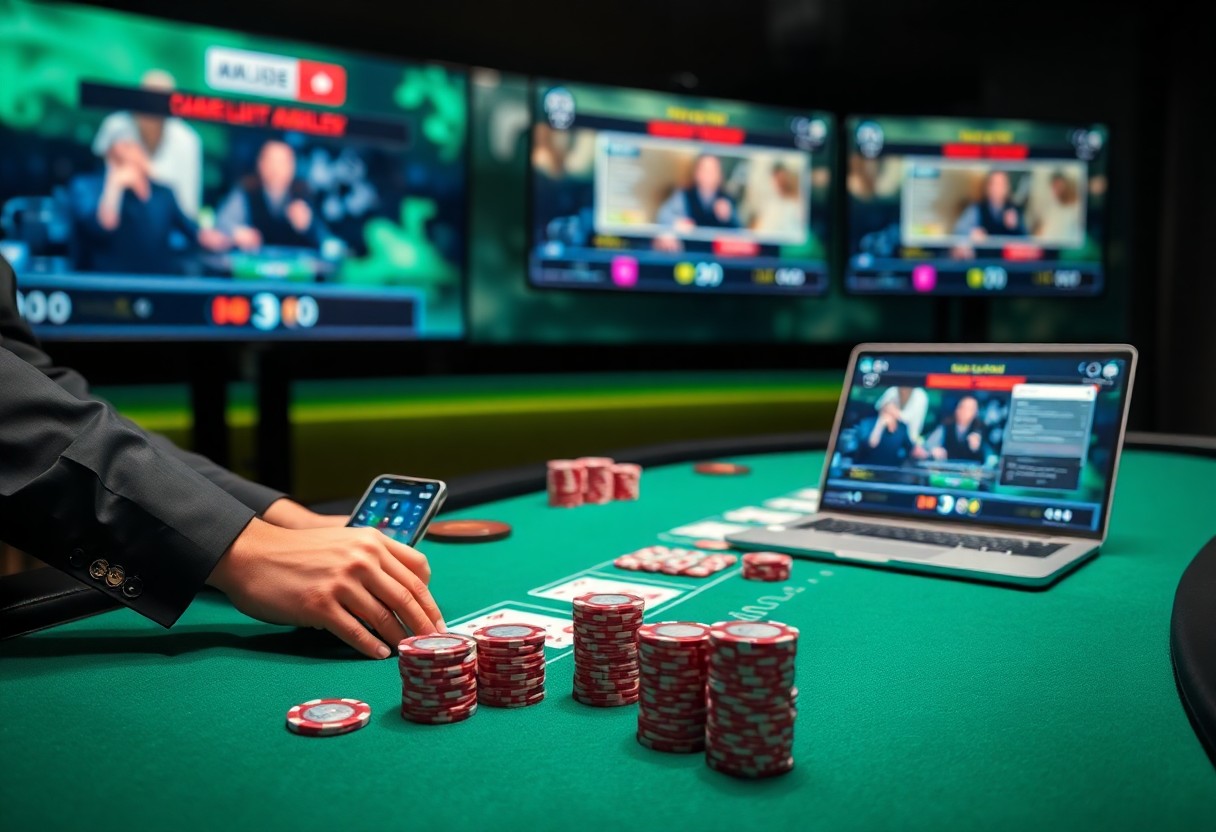
This guide helps players evaluate live blackjack options by focusing on licensed, regulated platforms, transparent live-dealer streams and fair RTP, and appropriate bet limits; check for SSL security and reputable reviews and avoid unlicensed sites and predatory side bets that increase risk. Assess dealer professionalism, latency, and software providers to ensure fairness and real-time interaction for a confident, informed choice.
Understanding Live Dealer Blackjack
Streaming quality, dealer professionalism, and rule sets strongly affect outcomes: tables with 3:2 payouts, 6-8 decks, and standard late surrender tend to offer the lowest house edge (around 0.5% with basic strategy). Fast-shoe or speed blackjack pushes 25-30 hands per hour and raises variance, while VIP tables with $100-$10,000 limits change bankroll requirements; verify licensing and RNG audit reports for security.
Types of Live Dealer Blackjack Tables
Players choose between low-stakes, high-stakes, multi-hand, speed, and unlimited-seat tables; bet ranges typically span <$1 to $10,000, and rules (e.g., dealer hits soft 17) vary by table. Popular variants include classic 3:2, VIP high-limit, and multi-hand formats allowing 2-5 hands per round. Recognizing how limits, speed, and payout rules alter expected returns helps you pick the right table.
- Classic – traditional 3:2 payout, standard splitting/doubling rules.
- VIP – higher limits ($100-$10,000), fewer distractions, pro dealers.
- Multi-hand – play 2-5 hands simultaneously, increases variance.
- Speed Blackjack – 25-30 hands/hour, automated shuffles reduce downtime.
- Unlimited – unlimited players via streamed shoe, common for casual play.
| Classic | 3:2 payout; typical bet $1-$500; dealer stands/hits rules vary. |
| VIP | High limits $100-$10,000; tailored service; fewer seats. |
| Multi-hand | Play 2-5 hands; higher total stake and variance. |
| Speed Blackjack | Automated shuffles; 25-30 hands/hour; faster gameplay. |
| Unlimited | Many players via interface; ideal for social/low-stakes sessions. |
Key Features to Look For
Focus on payout structure (3:2 vs 6:5), clear table limits, dealer behavior (hits/stands on soft 17), and stream resolution (720p/1080p reduces misreads). Also verify side bet RTPs-many fall below main game returns-and check whether live chat and session history are available. After comparing these attributes you can shortlist tables that match your bankroll and strategy.
- Payouts – 3:2 is preferable to 6:5 for long-term returns.
- Bet limits – ensure min/max fit your bankroll management.
- Rules – dealer stands/hits on soft 17, surrender, double-after-split.
- Stream quality – 720p+ reduces misreads and latency.
- Licensing – audited RNG and valid gaming license increase trust.
Digging deeper, examine published RTPs for side bets (often 90-95%), typical shoe composition (6 vs 8 decks) which affects card-count impact, and dealer rotation frequency which influences human error rates; check sample tables where perfect pairs or 21+3 are offered and note their house edges. After validating these specifics against your playstyle, prioritize tables that balance transparency, odds, and comfort.
- Side bet RTPs – frequently lower than base game; quantify before playing.
- Deck count – 6-8 decks are standard; fewer decks slightly favor players.
- Dealer rules – surrender options and DAS materially affect EV.
- Session tools – hand history, stake controls, and chat enhance control.
- Audit reports – public RNG/third-party audits indicate fairness.
Important Factors to Consider
Focus on elements that directly affect wins and playability: table limits, dealer speed, stream quality and rule variations. Many sites list minimums from $1-$5 for micro tables, mid-stakes around $10-$200, and high-roller options up to $5,000+. Check for transparent payouts and visible dealer cams when choosing a table. Any evaluation should weigh house edge, provider reputation and available variants.
- Live dealer
- Blackjack
- Software providers
- Game limits
- Variants
- Betting limits
- RTP
Software Providers
Top studios determine table rules, interface and video quality: Evolution (founded 2006), Playtech (1999), Pragmatic Play (2015) and Ezugi (2012, acquired 2018) supply the majority of live blackjack tables. Providers differ on features-multi-camera HD streams, side-bet options, and mobile latency-so choose ones with consistent HD feeds and professional dealers; those traits directly reduce misreads and delivery delays that cost real money.
Game Limits and Variants
Table stakes vary widely-micro $1-$5, casual $10-$50, high-roller $100-$5,000+-and variants such as Classic Blackjack, Infinite Blackjack, Spanish 21 and Double Exposure alter both strategy and edge. Rule differences like number of decks, dealer hitting soft 17 and blackjack payouts materially affect profitability, so match your bankroll to both limit and variant before sitting down.
Rule combos change house edge: single-deck with 3:2, S17, DAS offers the lowest edge, while tables paying 6:5 instead of 3:2 raise the house edge by roughly 1.4%, a significant penalty. Also note surrender rules, number of decks and whether splits can be re-doubled-each tweak can swing the expected return by tenths of a percent, making precise rule checks as important as the stake level.
Tips for Choosing the Best Table
Filter tables by table limits, minimum bets and maximums to match your budget-casual play often suits $1-$5 minimums while mid-stakes begin around $25. Compare live dealer blackjack rules like 3:2 payouts, late surrender, and bet spread flexibility; avoid tables with aggressive side bets that raise the house edge. Check video quality and latency; poor streams disrupt timing. Thou choose tables that balance rules, limits, and pace for your strategy.
- Minimum/maximum bets – align with your session units
- Rules & payouts – prefer 3:2 blackjack, late surrender, double after split
- Dealer experience & pace – seasoned dealers deal more consistently
- Software & latency – low-latency streams and clear cameras reduce mistakes
Bankroll Management
Use a unit sized at 1-2% of your total bankroll per hand-for a $1,000 roll that’s $10-$20 units. Set a session stop-loss of 10-20% and a profit target of 20-50% to preserve capital and lock gains; record each session to spot leaks. Avoid chasing losses by increasing units after negative swings, and adjust stakes only after sustained positive variance.
Game Pace and Dealer Interaction
Measure game pace in hands per hour-roughly 40-70 for many live tables-and factor how pace changes variance: faster play yields more decisions and higher short-term variance, slower lets you think and apply strategy; gauge dealer interaction for table atmosphere, since chatty dealers can distract or encourage tilt. Choose pace that matches your concentration and betting plan.
Watch at least 10 hands before joining to time shakes, shuffles, and betting windows; tables using continuous or automatic shufflers often shorten downtime but can increase session variance. If you rely on pattern recognition or advanced tactics, prefer tables with predictable cadence and visible discard trays. Also test for dealer English fluency and camera framing-both affect communication and split/deal timing, which matter when you play tight unit sizing.
Step-by-Step Guide to Finding Your Table
| Step | What to check |
|---|---|
| Provider | Evolution, Playtech, Pragmatic Play offer the most consistent HD streams and trained dealers. |
| Stakes | Match minimums to your bankroll: $1-$25 low, $25-$100 mid, high rollers > $100. |
| Rules & payouts | Prefer tables paying 3:2 for blackjack; avoid 6:5 which raises the house edge significantly. |
| Decks & shuffle | Most live games use 6-8 decks; continuous shufflers mean no depletion advantage. |
| Speed & stream | Aim for HD video and low latency (2s) so decisions aren’t rushed. |
| Side bets & limits | Side bets raise the house edge; only play them if payout tables and max wins justify the risk. |
Researching Online Casinos
Compare licensed operators (UKGC, MGA) and confirm audited testing (eCOGRA, iTech Labs); check the live provider roster-sites listing Evolution or Playtech usually offer reliable streams; verify SSL and read recent player reviews for latency, dealer professionalism, and payout history before joining.
Evaluating Bonuses and Promotions
Scan terms for wagering multipliers (commonly 20x-50x), live game contribution rates (often 0-10%), max-bet caps (typically 5% of bonus), and expiry windows (7-30 days); low contribution plus high multiplier makes clearing a bonus via live blackjack effectively impractical.
For example, a $100 bonus with a 30x requirement and 10% live contribution requires total live bets of (100×30)/0.10 = $30,000 to clear; by contrast, no-wagering bonuses or cashback are far more valuable for live blackjack.
Pros and Cons of Live Dealer Blackjack
| Authentic, face-to-face experience with real dealers and physical cards | Slower pace: typically 30-50 hands/hour versus 100+ in RNG games |
| Social interaction and live chat create a casino atmosphere | Tip expectations and social pressure can increase cost of play |
| Transparency-visible shuffling and dealing reduce RNG doubts | Limited ability to review long-term shoe history or session logs on some sites |
| Professional studios from Evolution, Playtech, Pragmatic raise trust | Some smaller studios operate without strong licensing; verify provider and license |
| Wide rule variety and side bets for variety and high-roller tables | Side bets often inflate house edge to 4-8%+ compared with ~0.5% base |
| HD streams (720-1080p) and multiple camera angles improve visibility | Connection lag or stream drops can cause missed actions or interrupted bets |
| Realistic limits: many tables offer high maximums for serious players | Fewer micro-bet tables for casual players; minimums can be higher than RNG rooms |
| Rules like S17, double after split (DAS), and surrender mirror land casinos | Unfavorable rule sets (H17, no DAS, 6-8 decks) can raise house edge by ~0.2-0.5% |
Advantages of Playing Live
Live blackjack offers near-casino realism: visible shuffles, professional dealers and studio feeds often yield the same RTP as land-based tables (standard house edge around 0.5% with good rules). Many providers support clear rule displays, variable stakes from micro to high-roller limits, and social features; players who value trust and interaction typically accept slower hands and slightly higher minimums in exchange for that authenticity.
Disadvantages and Common Pitfalls
Gameplay speed drops markedly-about 30-50 hands per hour-which affects hourly loss, and many tables push players toward side bets or tipping. Also watch table rules: H17 vs S17, number of decks, and absence of double-after-split can add 0.2-0.5% to house edge; connectivity issues and unlicensed studios are further risks.
Digging deeper, calculate expected loss to compare formats: expected loss per hour = (hands/hour) × (average bet) × (house edge). For example, 40 hands/hour × $10 bet × 0.005 = $2/hour, but if side bets push edge to 0.04 then $16/hour. Case studies show recreational players switching from RNG (100+ hands/hour) to live can see session volatility and time costs rise substantially. Verify provider reputation, table rules (S17, DAS, surrender), and bet spreads before committing bankroll to avoid these common pitfalls.
Frequently Asked Questions
How do live dealer rules differ from RNG blackjack?
Live tables typically use a physical shoe of 6-8 decks and offer real-time dealing, which means rule variations like dealer H17 vs S17, double-after-split, or late surrender will directly affect house edge; for example, S17 with DAS can reduce the house edge by roughly 0.1-0.3% compared with restrictive rules, so always check the table rules panel before joining.
What bet sizes should I choose for live play?
Low-limit live tables often start at $1-$5, mid-stakes sit around $25-$100, and high-roller tables exceed $500; a practical bankroll approach is to size single bets at about 1-2% of your bankroll so a $1,000 bankroll implies $10-$20 bets to withstand variance over 100+ hands.
Are live dealer games fair and secure?
Licensed studios stream from regulated jurisdictions, use certified equipment, and undergo independent audits (e.g., GLI, eCOGRA); encryption protects data while the physical cards eliminate RNG black‑box concerns, so prioritize operators with visible licensing seals and third‑party audit reports on payout fairness.
Which side bets or variants are worth playing?
Most side bets (Perfect Pairs, 21+3) carry house edges that range widely but commonly fall between 2-15%, far above a well-played base game; stick to variants with favorable rules where the base-game edge can approach 0.5% and treat side bets as entertainment, not long-term strategy.
Can I use basic strategy or card counting online?
Basic strategy applies directly to live dealer blackjack and can cut the house edge significantly; however, online live studios often use large shoes and frequent shuffling, so classic card counting becomes ineffective in most live streams even though it isn’t illegal-verify shuffle frequency and shoe size if counting is part of your plan.
Summing up
So select live dealer blackjack tables by prioritizing licensed, regulated casinos with transparent rules, fair RTP and suitable betting limits; assess dealer professionalism, video quality and latency; verify payout speed, bonuses with reasonable wagering, and secure payment options; confirm game variants and side-bet rules that fit your strategy, and test on mobile to ensure consistent play.
FAQ
Q: What factors should I evaluate before joining a live dealer blackjack table online?
A: Check the table rules (dealer hits or stands on soft 17, allowed doubling and splitting rules, surrender availability) and the payout structure (3:2 vs 6:5) because they directly affect house edge. Match table minimums and maximums to your bankroll and preferred bet sizing so you aren’t forced to play outside your comfort zone. Look at deck count and shuffling frequency, whether continuous shuffling machines are used, and which side bets are offered along with their RTPs. Also consider table speed (how quickly hands are dealt), number of seats and how seat rotation works, and dealer language/interaction style if you prefer a specific pace or level of chat.
Q: How do software providers, licensing, and security impact the quality of live dealer blackjack?
A: Reputable providers (for example, Evolution, Playtech, Pragmatic Play Live) deliver consistent video quality, reliable streaming, professional dealers, and polished user interfaces with features like hand history and game statistics. Licensing and regulation by authorities such as the UKGC, MGA, or similar bodies indicate oversight of fairness and payout handling. Verify the casino’s security measures-SSL encryption, documented audited payouts, and visible licensing details-plus transparent terms for deposits, withdrawals and KYC. Community reviews and independent audits reveal recurring issues with delays, unfair practices, or withheld winnings, so favor operators and providers with strong track records.
Q: What practical and technical checks should I perform before wagering real money on a live blackjack table?
A: Test the table in play-money or low-stakes mode to assess video/audio quality, latency and stability on your device and network; ensure mobile apps or browser streaming perform well where you play. Review bonus terms if using promotional funds-many bonuses exclude live casino or impose high wagering requirements. Confirm accepted payment methods, withdrawal speeds, and any fees. Check dealer tipping options and etiquette, chat moderation, and seating policies. Finally, set a session stake plan and loss limits, and verify that customer support and dispute resolution channels are accessible should any technical or transactional issue arise.